How FOXG1 Families Are Changing the Future of Rare Disease Treatment
FOXG1 research is driven by more than science. It’s driven by families.
For many rare diseases, the path to treatment is long, complex, and often uncertain. Despite affecting an estimated 400 million people worldwide, the vast majority of rare diseases still have no approved treatment.
In many cases, the barrier is not the science. It’s the system.
Traditional drug development can take decades and cost hundreds of millions of dollars, making it difficult for pharmaceutical companies to prioritize conditions with smaller patient populations.
For the FOXG1 community, that reality led to a different decision. Not to wait.
A Different Kind of Motivation
The FOXG1 clinical trial is not driven by a pharmaceutical company. It’s driven by families.
Parents, researchers, clinicians, and advocates came together to build something that did not previously exist. Many of the scientists leading this work are also parents of children with FOXG1 syndrome.
The motivation behind this effort is deeply personal:
“We are not motivated by money. We are motivated by our children.”
This is patient-led drug development in action.
What Is the FOXG1 Gene Therapy?
The therapy being developed is a gene replacement therapy designed to address the root cause of FOXG1 syndrome.
FOXG1 syndrome is caused by a mutation in a single copy of the FOXG1 gene, which disrupts normal brain development and function.
The goal of this therapy is to deliver a healthy, working copy of the FOXG1 gene to brain cells.
This is done using an AAV9 viral vector, a widely used delivery system in gene therapy.
The vector can be thought of as a carrier, delivering the healthy FOXG1 gene to the cells that need it. Once delivered, the goal is to restore FOXG1 protein levels and support more typical cellular function.
This approach is particularly well suited for FOXG1 syndrome because one functional copy of the gene already exists. The therapy aims to increase the amount of healthy FOXG1 protein available. Read more about the gene therapy here!
From Lab Discovery to Real Treatment
Developing a therapy is not a single step. It’s a complex process that begins with understanding the biology of a condition and testing potential approaches in models.
In FOXG1 research, preclinical studies using animal models have shown encouraging results, including increased FOXG1 expression in the brain and improvements in symptoms observed in those models.
In some cases, researchers have also observed changes in brain structure, including improvements in features such as agenesis of the corpus callosum. This stage, often called proof of concept, is where many research efforts stop.
Turning that concept into a therapy that can be tested in humans requires an entirely different phase of work.
The Step Most People Never See
Between research and clinical trials lies one of the most difficult stages of drug development: translational science.
This is where a scientific idea becomes a real therapy.
It involves:
extensive safety studies
determining dosing and delivery methods
manufacturing a clinical-grade therapy
preparing regulatory submissions
building the infrastructure for clinical trials
This process is complex, highly coordinated, and often where promising therapies fail.
It requires not just strong science, but collaboration across multiple disciplines working in sync.
Rewriting the Timeline
Traditionally, developing a new therapy can take up to 30 years and cost hundreds of millions of dollars. For rare disease communities, that timeline and pricetag is not realistic.
The FOXG1 community has taken a different approach.
By building a focused, collaborative model and assembling a purpose-driven team, they have worked to significantly reduce both the cost and timeline.
Instead of following a traditional path, research, development, and clinical planning have been integrated into a continuous process, allowing progress to move more efficiently.
A Historic Milestone
In January 2026, the FDA cleared the FOXG1 gene therapy to begin first-in-human clinical trials.
This marks a defining moment. The therapy, known as FRF-001, is being sponsored by the FOXG1 Research Foundation itself, not a pharmaceutical company.
This makes it one of the first known examples of a parent-led nonprofit independently advancing a gene therapy into clinical trials.
It is not only a milestone for FOXG1 syndrome, but for the broader rare disease community.
More Than a Clinical Trial
A clinical trial is not a guaranteed outcome. It is a structured process designed to evaluate safety, dosing, and potential effectiveness.
But reaching this stage is significant.
It reflects years of work across research, development, fundraising, and global collaboration. It represents a shift from possibility to active study.
Why This Matters Beyond FOXG1
The impact of this work extends beyond a single condition.
It demonstrates that:
new models of drug development are possible
patient-led efforts can drive meaningful progress
collaboration can accelerate timelines
The FOXG1 clinical trial is not just about one therapy. It’s a case study in how rare disease communities can move science forward when traditional systems fall short.
About the FOXG1 Research Center
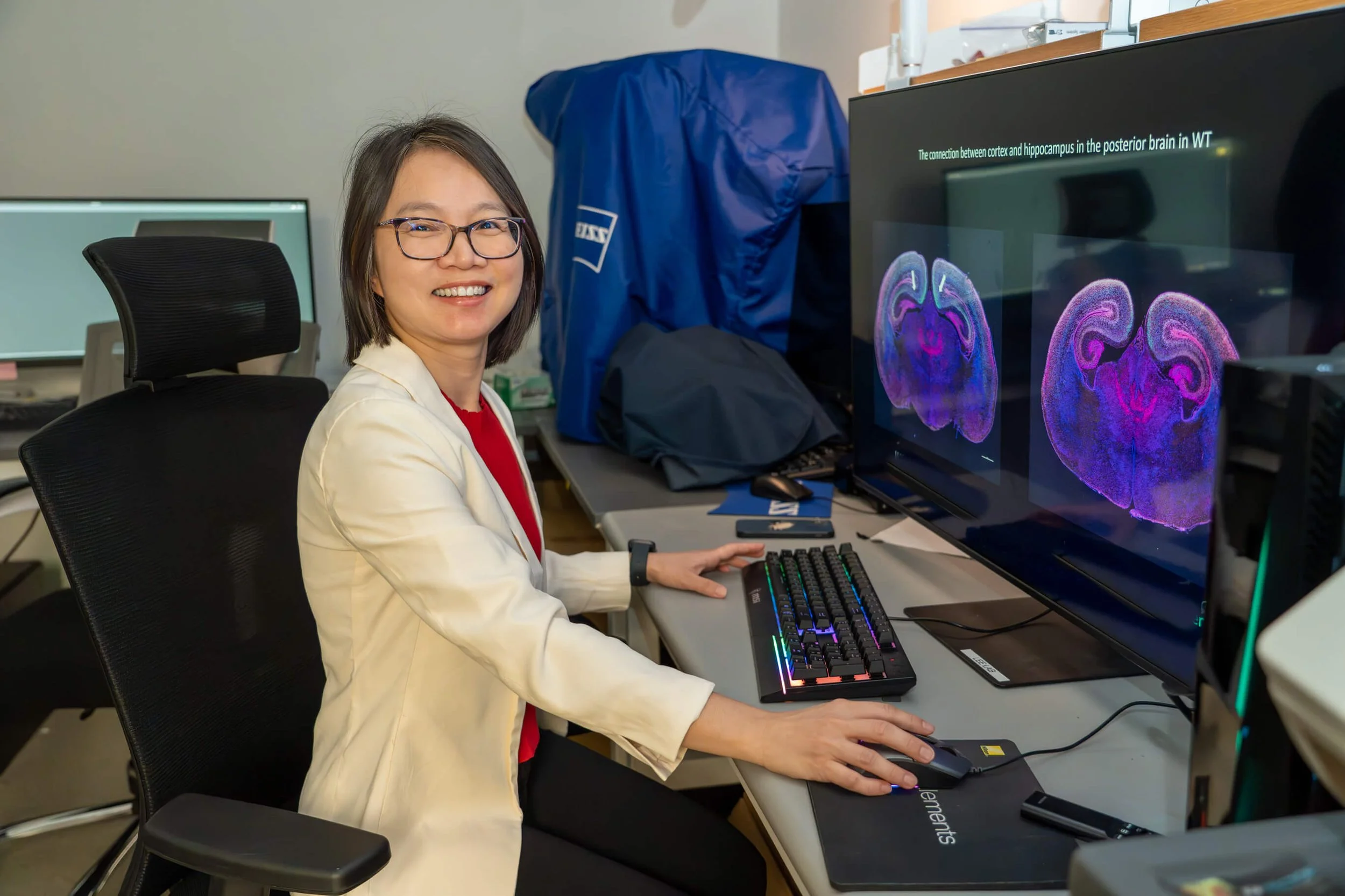
At the FOXG1 Research Center at the University at Buffalo, our work is rooted in understanding the biology of FOXG1 syndrome and helping move research forward in meaningful ways.
Over the years, our team has contributed to building the scientific foundation that makes efforts like this possible, studying how the FOXG1 gene functions in the brain and how changes in that gene impact development.
We are proud to be part of a broader, collaborative effort that is working to translate this knowledge into potential therapies.
As research continues, our focus remains the same: to deepen our understanding of FOXG1, support the development of new approaches, and contribute to progress that can ultimately improve the lives of individuals and families affected by this condition.
Looking Ahead
The start of a clinical trial is not the end of the journey. It is the beginning of a new phase. One that will continue to require research, collaboration, and careful study. But it also represents something that once felt out of reach: A potential therapy, built by a community that refused to wait.

FOXG1 Research Center is dedicated to understanding and finding treatments for FOXG1 syndrome and other neurodevelopmental disorders.
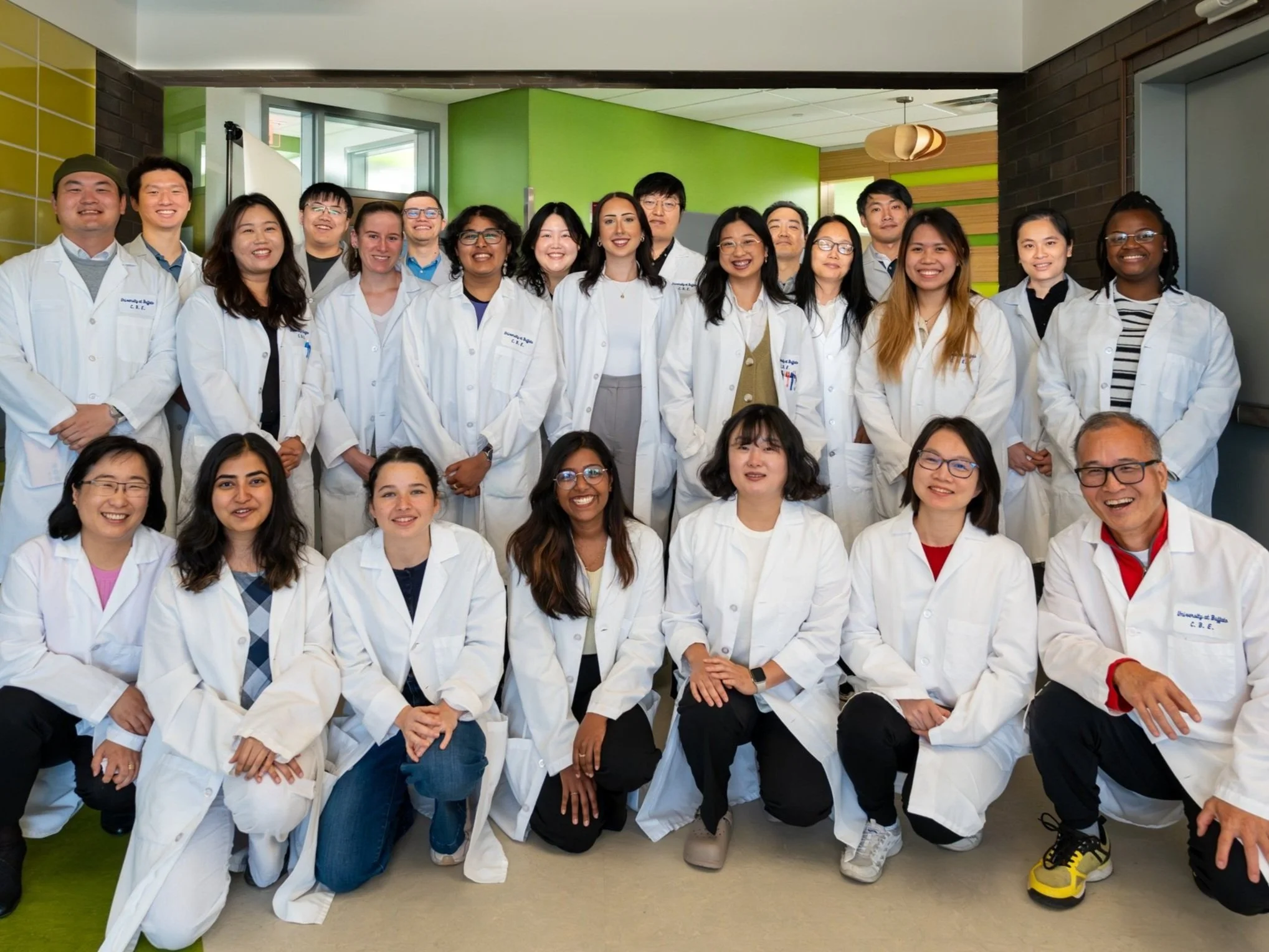
Our Team
Drs. Soo-Kyung Lee, PhD. and Jae W. Lee, PhD. are the principal investigators of FOXG1 Research Center. Our team is full of dedicated individuals with the common goal of studying FOXG1 Syndrome to find treatment options and further understand the condition.

Our Publications
To learn more details about our research, please refer to our publications.
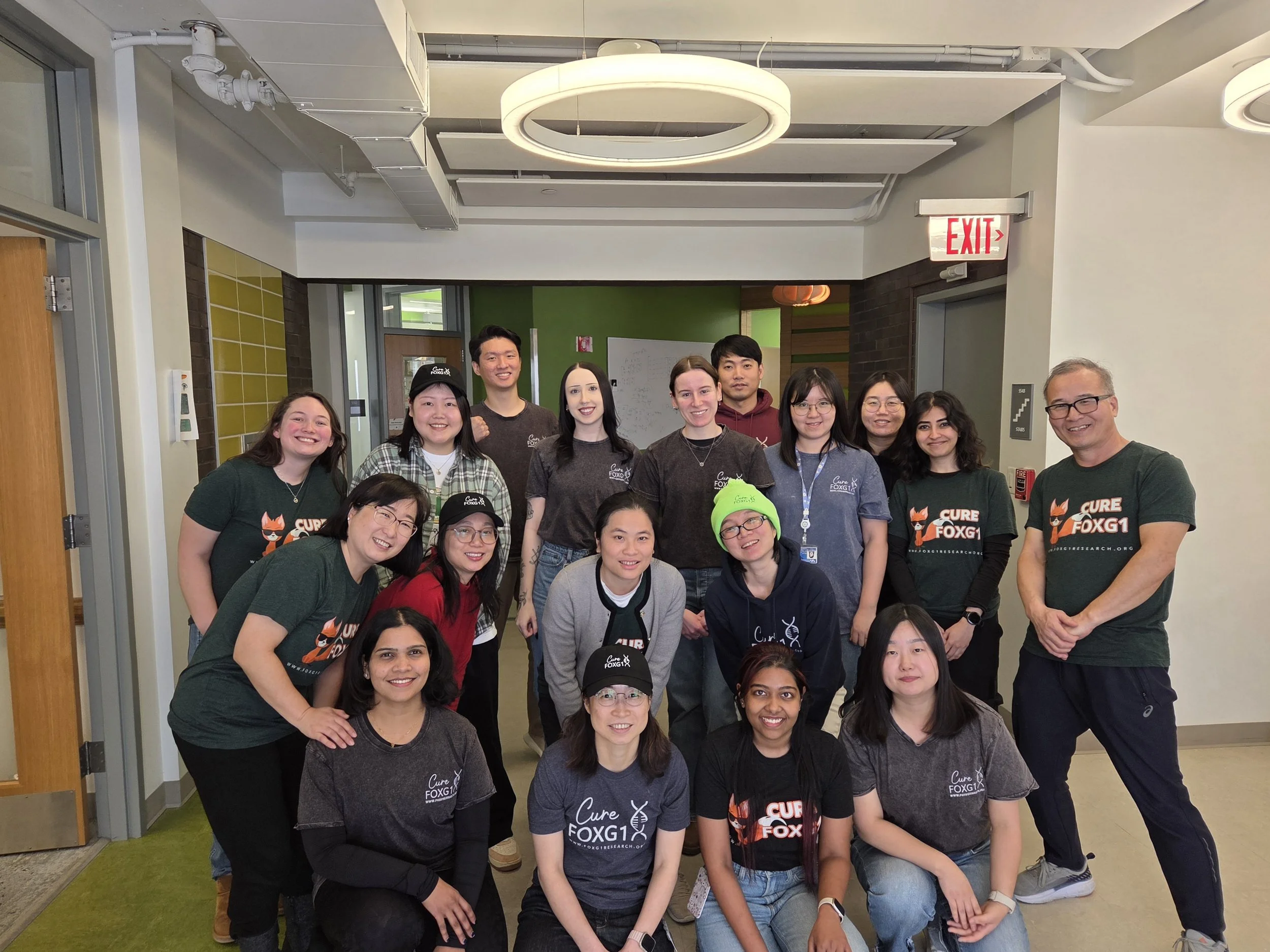
Media Coverage & Awards
The FOXG1 Research Center is honored to be recognized for its contributions to rare disease research, neuroscience, and the broader scientific community.