From Curiosity to Confidence: Aaliyah Ito’s Journey at the FOXG1 Research Center
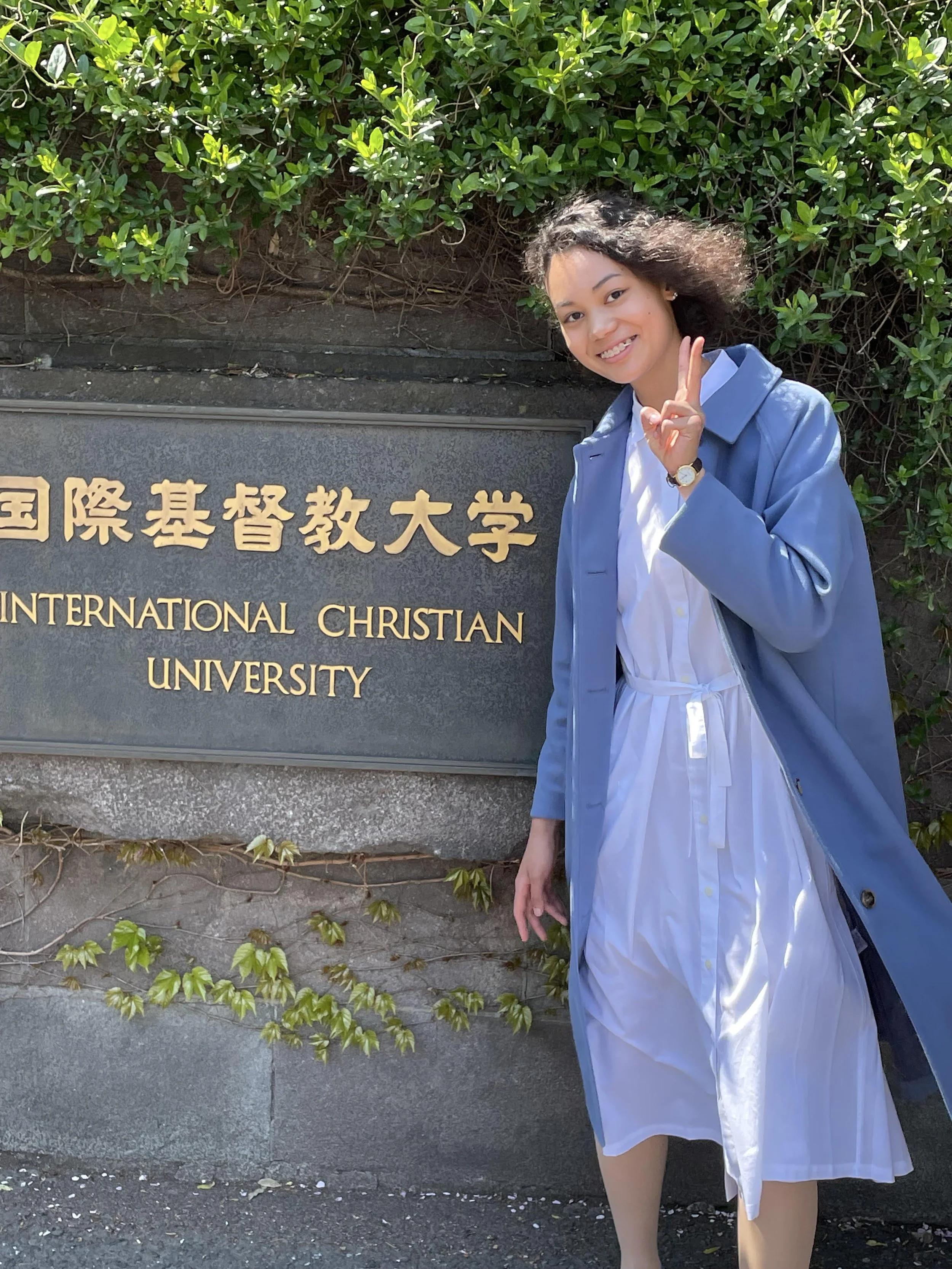
Aaliyah at her entrance ceremony into International Christian University in Mitaka, Japan.
When Aaliyah Ito first arrived at the University at Buffalo, she had a clear direction in mind.
Originally from Japan and studying psychology on a pre-med track, she already knew she wanted to pursue a future in child psychiatry. What she didn’t yet know was how much her perspective on research, opportunity, and even herself would evolve along the way.
Finding Her “Why”
Aaliyah’s interest in child psychiatry is deeply rooted in her lived experiences.
Growing up, she was exposed to disparities in access to resources and opportunity. Having spent time in multiple countries, she saw firsthand that challenges in children’s mental health are not isolated. They are global, complex, and often tied to larger systemic issues like poverty.
“I’ve always been interested in listening to other people’s stories,” she shared. “And I wanted to do something about the disparities I was seeing.”
For Aaliyah, child psychiatry felt like a path that combined both. A way to understand individuals on a personal level while also contributing to larger change.
She is especially drawn to working with children because of their resilience.
“Children can recover and grow,” she explained. “But they don’t always have the opportunity or the support to do that. I think everyone deserves hope for the future.”
Rethinking What a Research Lab Looks Like
Before joining the FOXG1 Research Center, Aaliyah had a very different image of what research would be like.
“I thought the lab would be intense,” she said.
That expectation came from her experiences in Japan, where research environments often follow strict hierarchies. Opportunities can be limited to those at more advanced stages, and younger students may feel they need to prove themselves before even asking questions.
But what she found at the lab was something entirely different.
“It’s actually a very relaxed and supportive environment,” she said. “Everyone is friendly and willing to answer questions.”
That openness made a lasting impression.
Instead of feeling like she needed to figure everything out on her own, Aaliyah found a space where curiosity was encouraged, not judged.
A Shift in Perspective
One of the most meaningful lessons Aaliyah took from her time in the lab was a simple but powerful realization.
“It’s not about your age or your previous experience,” she said. “It’s about whether you’re willing to commit and put in the effort.”
That mindset shift didn’t happen all at once. It came through observation and experience.
Seeing younger students actively contributing, and seeing women represented throughout the lab, challenged assumptions she had carried with her.
“In Japan, there can be a strong sense of seniority and fewer opportunities for younger students or women in STEM,” she explained. “Being here made me realize those things don’t have to be barriers.”
It also changed how she saw herself.
“I used to think I wasn’t smart enough,” she said. “But now I feel like if I choose to do something, I can do it.”
Learning by Doing
In the lab, Aaliyah’s work has focused on data analysis and hands-on research, including working with mouse models.
Her senior thesis explored social behavior and auditory sensitivity in relation to the FOXG1 gene, asking an important question: is there a relationship between these factors?
While the research is ongoing, the process itself has been one of the most rewarding parts.
“It’s so interesting to experiment with an idea and then see the results,” she said.
Beyond technical skills, she has developed a stronger ability to think critically, test ideas, and analyze data with precision.
Discovering FOXG1 and the World of Rare Disease
Before joining the lab, Aaliyah had never heard of FOXG1 syndrome. Like many students entering research, she came in with a general understanding of medicine, but limited exposure to rare diseases.
That quickly changed.
“I realized there are so many conditions I didn’t know about,” she said.
Learning about FOXG1, and the families affected by it, gave her a new perspective on both research and medicine.
“It’s inspiring to see how much effort is going into understanding something so rare,” she shared. “A lot of what we learn in school is already established knowledge. But here, people are working to discover something new.”
That sense of discovery, combined with the real-world impact, made the experience especially meaningful.
A Space to Grow
When asked about her favorite part of the experience, Aaliyah didn’t point to a single moment.
Instead, she described something bigger. “The space to be creative,” she said.
The lab gave her the opportunity to explore ideas, ask questions, and grow in ways she hadn’t expected. And while there wasn’t one defining moment, there was a feeling that stayed with her.
A sense of confidence. “A feeling that if I choose to do something, I can do it.”
Looking Ahead
Aaliyah plans to attend medical school and pursue a career as a child psychiatrist. But her goals extend beyond clinical care.
“I want to be able to help patients individually,” she said, “but also understand and change things on a larger scale.”
She hopes to combine patient care with research, using both perspectives to better address mental health challenges, especially those tied to systemic issues like poverty.
“Health issues, especially in mental health, are interconnected,” she explained. “This experience helped me see that more clearly.” Her ultimate goal is simple, but powerful.
“To help children have a better future.”
A Lasting Impact
As her time at the FOXG1 Research Center comes to a close, Aaliyah says what she’ll miss most is the people and the experience itself.
But the impact of her time in the lab will stay with her. Not just in the skills she developed or the research she contributed to, but in the way it reshaped how she sees science, opportunity, and her own potential.
“I learned that science is about discovering the unknown,” she said. “And I’m happy to be part of that.”

The beautiful cherry blossoms in Mitaka, Japan!

FOXG1 Research Center is dedicated to understanding and finding treatments for FOXG1 syndrome and other neurodevelopmental disorders.
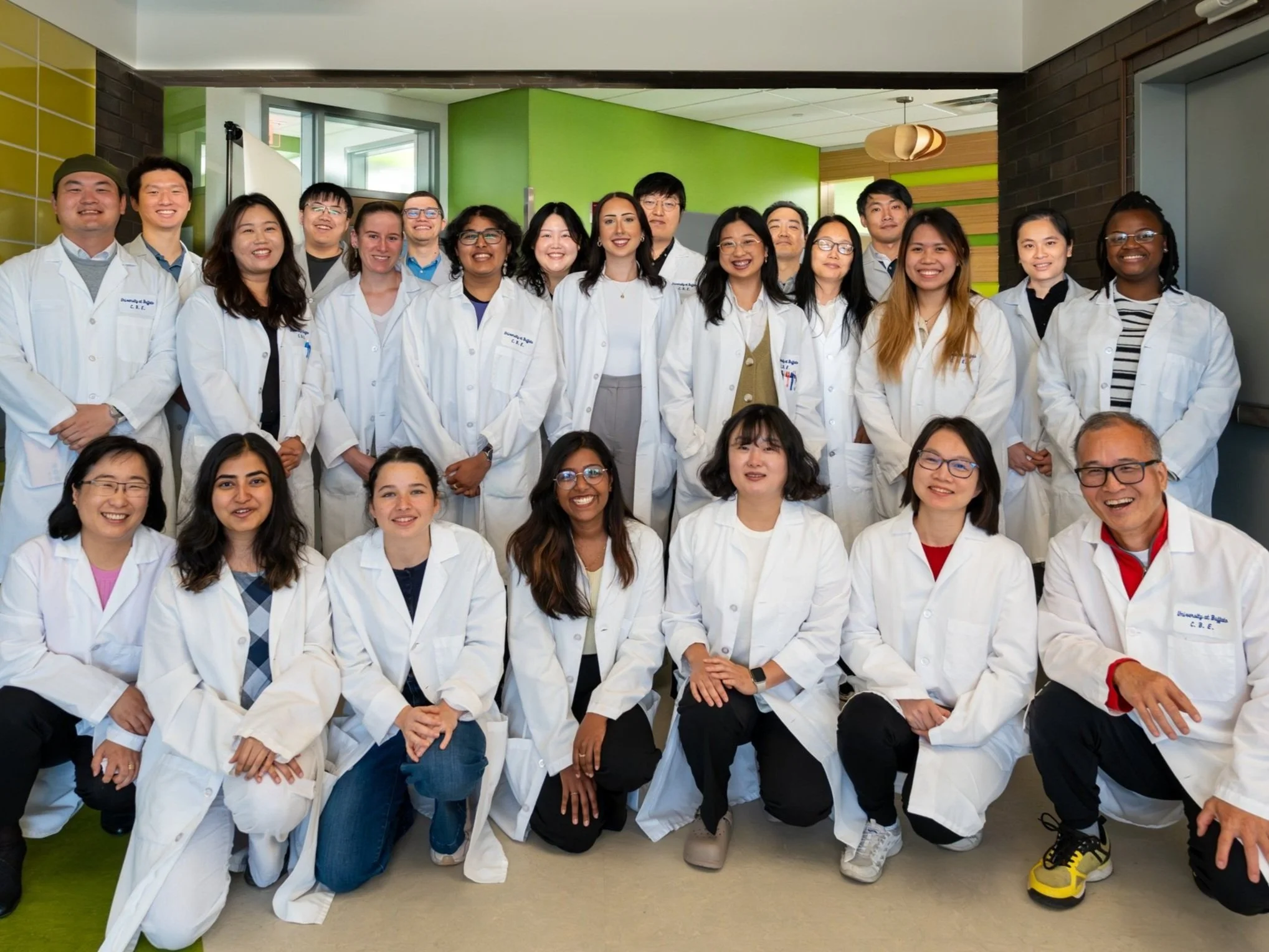
Our Team
Drs. Soo-Kyung Lee, PhD. and Jae W. Lee, PhD. are the principal investigators of FOXG1 Research Center. Our team is full of dedicated individuals with the common goal of studying FOXG1 Syndrome to find treatment options and further understand the condition.

Our Publications
To learn more details about our research, please refer to our publications.
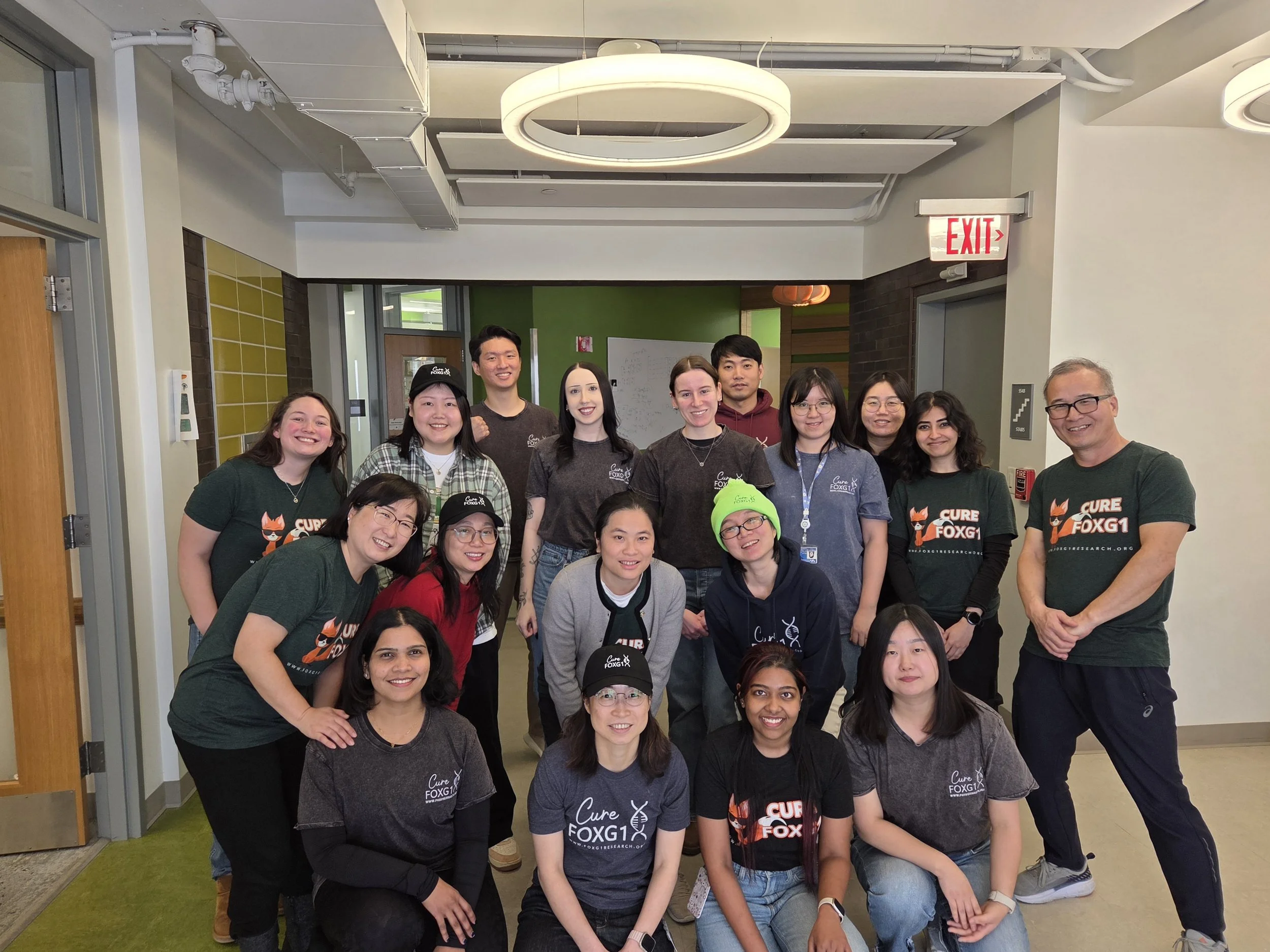
Media Coverage & Awards
The FOXG1 Research Center is honored to be recognized for its contributions to rare disease research, neuroscience, and the broader scientific community.