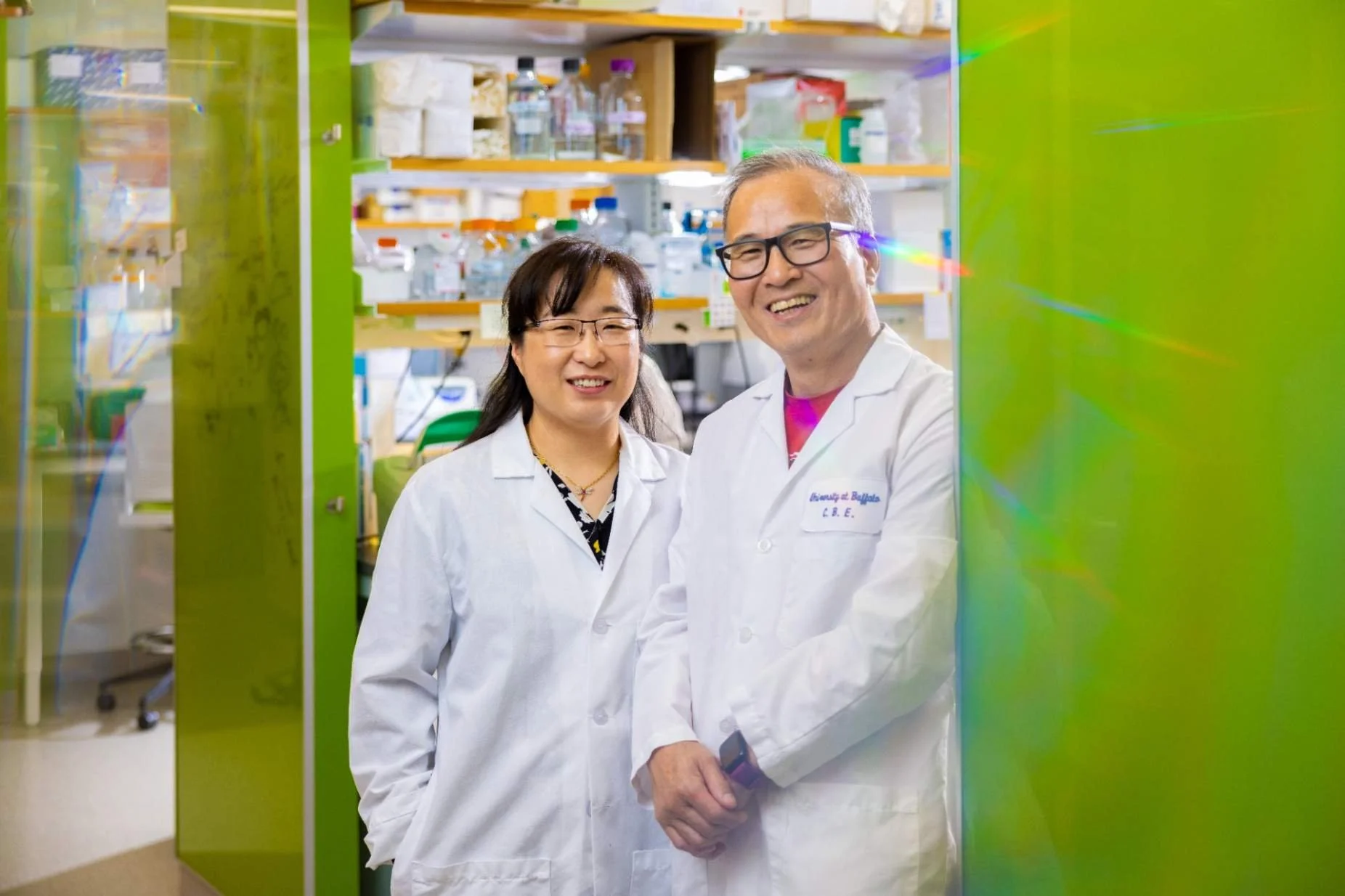
Dr. Soo-Kyung Lee and Dr. Jae Lee of the FOXG1 Research Center at the University at Buffalo, whose research helped advance the FOXG1 gene therapy toward clinical trials.
For families affected by FOXG1 syndrome, progress in research often unfolds slowly. Each discovery, experiment, and new insight builds on years of work.
But sometimes, a moment arrives that represents something bigger.
The FOXG1 community is celebrating one of those moments.
Our gene therapy developed through years of collaborative research has officially been cleared by the U.S. Food and Drug Administration (FDA) to begin clinical trials. This means that for the first time, a therapy designed specifically to treat FOXG1 syndrome will be tested in human patients.
For families who have waited years for meaningful progress, this milestone represents an extraordinary step forward.
What This Milestone Means
The therapy, called FRF-001, is a gene replacement therapy designed to address the underlying cause of FOXG1 syndrome.
FOXG1 syndrome occurs when a mutation affects the FOXG1 gene, which plays a critical role in early brain development. When this gene is not functioning properly, it disrupts how brain cells develop and communicate.
The goal of the therapy is to deliver a healthy working copy of the FOXG1 gene directly to brain cells, allowing them to produce the FOXG1 protein that is missing or reduced due to the mutation.
To do this, scientists use a delivery system known as an AAV9 viral vector. This vector acts as a carrier that transports the working FOXG1 gene to the cells that need it.
Gene therapy does not simply treat symptoms. Instead, it aims to address the biological root of the disorder.
While clinical trials are needed to determine safety and effectiveness in humans, reaching this stage means that years of laboratory research have successfully advanced to the point where testing in patients can begin.
From the Lab to Clinical Trials
The path from scientific discovery to a clinical trial is long and complex.
In many cases, promising findings in the laboratory remain in early research stages. Moving a therapy forward requires extensive preclinical testing, regulatory review, manufacturing development, and coordination between scientists, clinicians, regulatory agencies, and patient communities.
The FOXG1 gene therapy program has followed this path over many years.
Here at the FOXG1 Research Center, our researchers first demonstrated proof of concept in preclinical models, showing that delivering a working FOXG1 gene could increase FOXG1 expression in the brain and improve symptoms in models that replicate aspects of the condition.
These findings laid the scientific foundation that ultimately made clinical trials possible.
With the FDA’s clearance of the Investigational New Drug (IND) application, the therapy can now move into a first-in-human Phase 1/2 clinical trial.
This study will evaluate whether a single dose of FRF-001 is safe, tolerable, and shows early signs of effectiveness in individuals with FOXG1 syndrome.
Participants in the study will receive the therapy through intracerebroventricular injection, allowing the treatment to reach the brain.
The Role of the FOXG1 Research Center
The development of this gene therapy would not have been possible without the scientific work happening at the FOXG1 Research Center at the University at Buffalo.
Led by neuroscientists Dr. Soo-Kyung Lee and Dr. Jae Lee, the FOXG1 Research Center focuses entirely on understanding FOXG1 biology and developing therapies that could benefit patients.
Their work helped establish the foundational science behind the FOXG1 gene therapy approach.
Years of research in the lab contributed critical insights into how FOXG1 functions in the brain and how gene replacement strategies could potentially restore normal activity.
With the help of the team at FRC, The Lees’ work also demonstrated promising results in preclinical models, helping show that gene therapy could influence brain development and function in ways that might translate to patients.
This type of research is an essential step in transforming scientific ideas into real therapeutic possibilities.
A Parent-Led Effort Driving Drug Development
Another remarkable aspect of this milestone is how the clinical program itself came together.
The FOXG1 gene therapy clinical trial is being independently sponsored by the FOXG1 Research Foundation, a nonprofit founded by parents of children with FOXG1 syndrome.
In rare disease research, it is not uncommon for promising therapies to stall due to lack of commercial investment. By leading the development process directly, the FOXG1 Research Foundation has helped move the therapy forward in a way that prioritizes patients and the urgency felt by families.
As Nicole Johnson, co-founder of the FOXG1 Research Foundation and mother to a child with FOXG1 syndrome, shared when the milestone was announced:
“For years, families like ours were told there was nothing we could do. This FDA clearance brings us into the next phase—moving our gene therapy through patient clinical trials—and brings real hope to families around the world.”
This parent-driven model has helped accelerate the timeline for FOXG1 therapeutic development and created a powerful collaboration between families, researchers, clinicians, and regulatory experts.
The First Step Toward a Treatment
The upcoming study is designed as a Phase 1/2 open-label clinical trial.
At this stage, the primary goals are to evaluate:
• Safety and tolerability of the therapy
• How the treatment behaves in the body
• Early signals of potential clinical benefit
Researchers will follow participants over time to monitor outcomes such as motor development and other neurological measures.
Clinical trials are an essential part of developing any new therapy. They help scientists determine whether a treatment is safe and whether it provides meaningful benefits for patients.
While much work remains ahead, entering the clinical trial phase is one of the most important milestones in the journey from discovery to treatment.
A Moment Worth Recognizing
Reaching this point represents years of dedication across many parts of the FOXG1 community.
It reflects the persistence of families who advocated for research when few options existed.
It reflects the work of scientists who committed their careers to understanding FOXG1.
And it reflects the growing collaboration between researchers, clinicians, and patient organizations working toward the same goal.
For the FOXG1 Research Center, it is also a powerful reminder of why this work matters.
As Dr. Jae Lee shared when the news was announced:
“It brings hope not only for our daughter, but for all children and families affected by this devastating neurodevelopmental disorder.”
Looking Ahead
As the clinical trial prepares to begin, families and caregivers will likely have many questions about what comes next.
The FOXG1 Research Foundation will be sharing updates and additional information about the clinical trial, including eligibility criteria and resources for families who want to stay informed.
The FOXG1 Research Center will continue its research efforts as well, working to deepen scientific understanding of the condition and support the development of future therapies.
Reaching the clinical trial stage is not the end of the journey. It is the beginning of the next chapter.
But for a community that has spent years pushing the science forward, this moment is worth recognizing. Because for the first time, a therapy designed specifically for FOXG1 syndrome is moving from the lab toward patients.
To read all the details on the clinical trial, click here.

FOXG1 Research Center is dedicated to understanding and finding treatments for FOXG1 syndrome and other neurodevelopmental disorders.
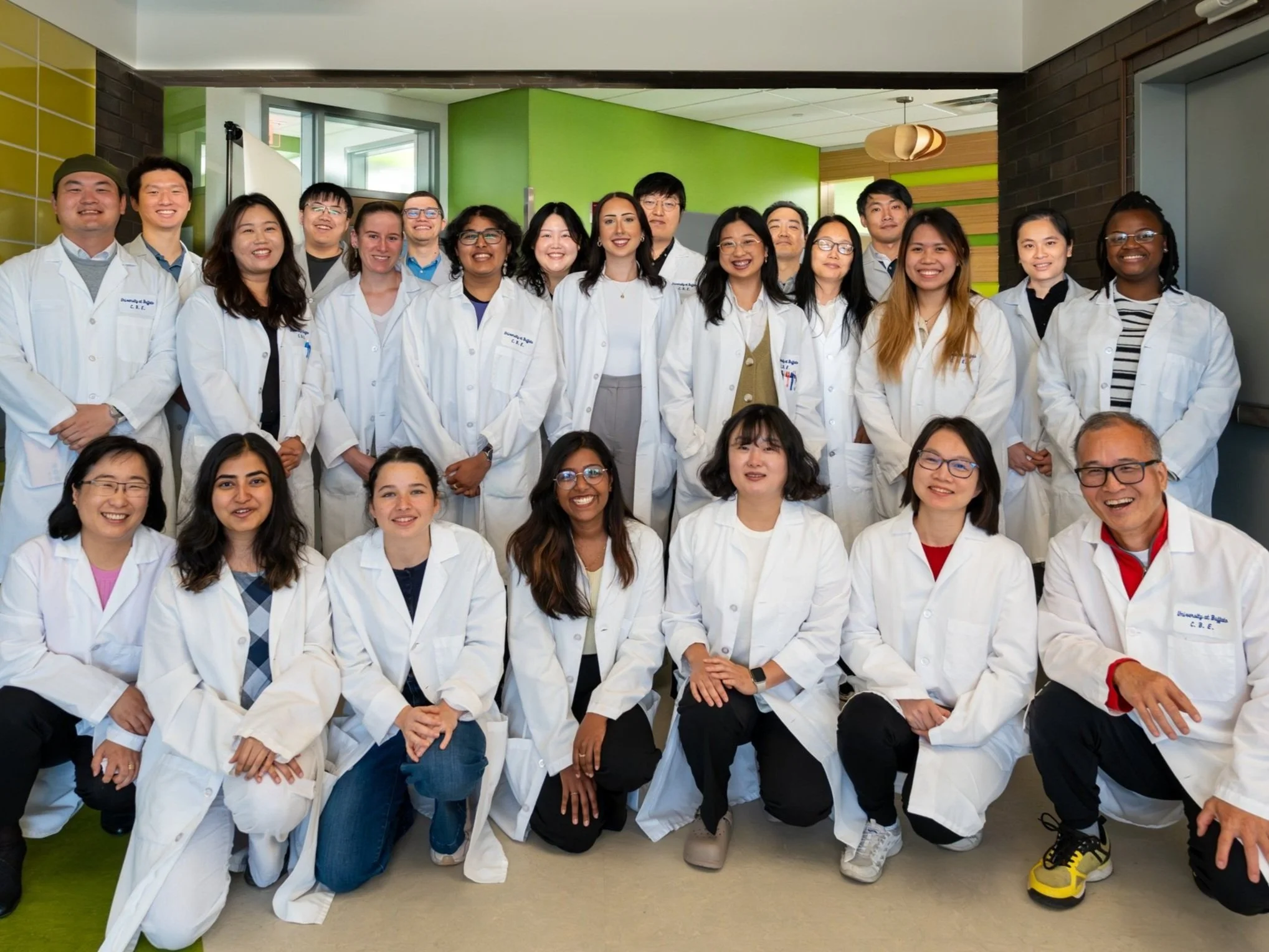
Our Team
Drs. Soo-Kyung Lee, PhD. and Jae W. Lee, PhD. are the principal investigators of FOXG1 Research Center. Our team is full of dedicated individuals with the common goal of studying FOXG1 Syndrome to find treatment options and further understand the condition.

Our Publications
To learn more details about our research, please refer to our publications.
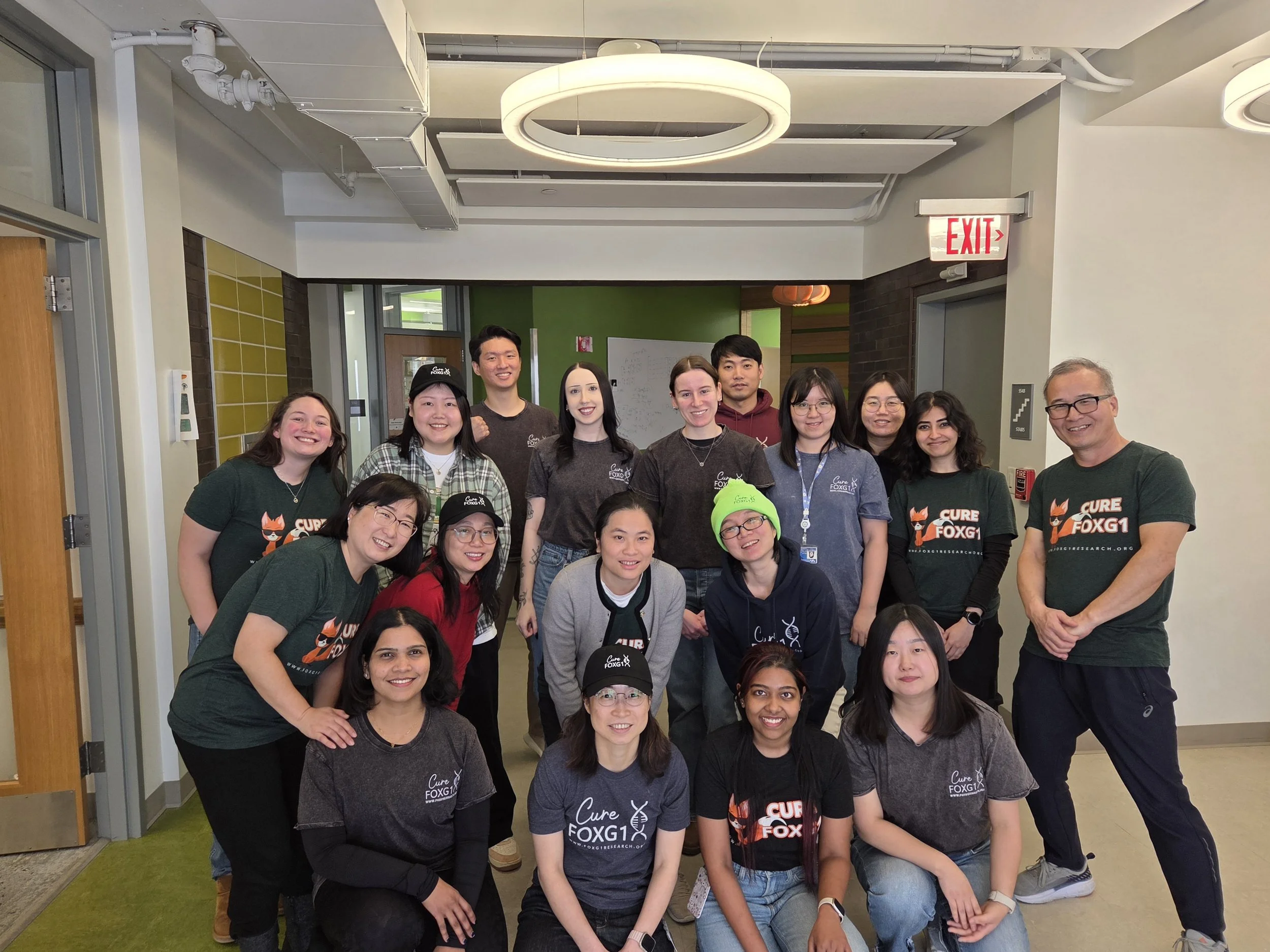
Media Coverage & Awards
The FOXG1 Research Center is honored to be recognized for its contributions to rare disease research, neuroscience, and the broader scientific community.