How Families Shape FOXG1 Research
Some of our most meaningful research questions come directly from FOXG1 families!
When people think about scientific research, they often imagine it beginning in a laboratory.
They picture researchers analyzing data, studying cells under a microscope, or running experiments designed to answer complex questions about biology and disease.
While those activities are certainly an important part of the process, many of the most meaningful research questions begin somewhere else.
They begin with families.
Every day, parents and caregivers living with FOXG1 Syndrome notice things that may never appear in a scientific paper. They witness challenges, celebrate milestones, and develop a deep understanding of how the condition affects their child's daily life. Over time, these experiences can reveal important patterns, helping researchers better understand which questions matter most to the community.
At the FOXG1 Research Center, we believe some of the most valuable insights come from listening.
The Questions Families Help Us Ask
Scientific discovery is often portrayed as a one-way process. Researchers conduct studies, publish findings, and share what they learn with families.
In reality, the relationship is much more collaborative.
Families frequently help researchers identify areas that deserve closer attention. Through conversations, family visits, conferences, surveys, patient registries, and natural history studies, caregivers share observations that may point to gaps in our understanding of FOXG1 Syndrome.
These observations do not provide all of the answers, but they often help reveal where researchers should begin looking.
One of the clearest examples of this comes from a symptom many FOXG1 families know all too well.
When Families Noticed Something Researchers Hadn't
Over the years, researchers at the FOXG1 Research Center began hearing a similar concern from parents and caregivers. Many families described unusually strong reactions to everyday sounds.
A vacuum cleaner turning on unexpectedly. A loud announcement. A sudden noise in a crowded room. Some children would startle intensely. Others would cry, shake, or cover their ears. In some cases, families reported that certain sounds could even trigger seizures.
These experiences reflected a condition known as hyperacusis, or increased sensitivity to sound. What made this observation so important was that researchers had not initially set out to study it.
The question emerged because families continued to bring it up.
Again and again, parents described how sound sensitivity affected daily life, making it clear that this was more than an isolated experience. As researchers listened, a new scientific question began to take shape:
Why are some individuals with FOXG1 Syndrome so sensitive to sound?
That question eventually became a research project.
Using mouse models carrying the same FOXG1 genetic changes, researchers began investigating how the brain responds to sound. Their studies revealed that the auditory regions of the brain appeared to process repeated sounds differently. Instead of gradually adapting to familiar noises, the brain continued responding strongly. Researchers also found fewer of the neurons that normally help calm those signals.
Today, that work continues as scientists explore whether intervention during an early stage of brain development could help prevent sound sensitivity from developing.
The families saw the pattern first.
The researchers' role was to ask why.
Building a More Complete Understanding of FOXG1 Syndrome
Stories like this highlight why family participation is so important.
No single family experiences FOXG1 Syndrome in exactly the same way. Yet when information is collected across a larger community, meaningful patterns begin to emerge.
The Global FOXG1 Patient Registry plays a critical role in this process.
By bringing together information from families around the world, the registry helps researchers better understand the full spectrum of FOXG1 Syndrome. Information about symptoms, developmental milestones, medical history, and daily experiences contributes to a more complete picture of the condition.
The registry also supports the Digital Natural History Study, which helps researchers understand how FOXG1 Syndrome changes over time.
Each family's contribution may seem small on its own, but together these experiences become an invaluable resource for research.
Why Connection Matters
Research is strongest when it reflects the realities of the people it is intended to serve.
That is why opportunities for connection are so important. Family visits, conferences, community events, and conversations with caregivers allow researchers to learn directly from those living with FOXG1 Syndrome every day.
These interactions help ensure that scientific questions remain grounded in the needs of the community.
They also remind us that behind every data point is a child, a family, and a story.
Moving Research Forward Together
The history of FOXG1 research is filled with examples of scientific curiosity, innovation, and discovery. It’s also filled with the voices of families who shared their experiences and helped researchers see the condition from a new perspective.
Research is not shaped by scientists alone.
It is shaped by caregivers who complete surveys. Families who participate in registries. Parents who ask questions at conferences. Individuals who share their stories and experiences.
The example of sound sensitivity shows what can happen when researchers listen closely.
A challenge that families encountered in everyday life became a scientific question, a research project, and a potential path toward future treatments.
That is the power of partnership.
And it is one of the many ways FOXG1 families continue to shape the future of research.

FOXG1 Research Center is dedicated to understanding and finding treatments for FOXG1 syndrome and other neurodevelopmental disorders.
Our Team
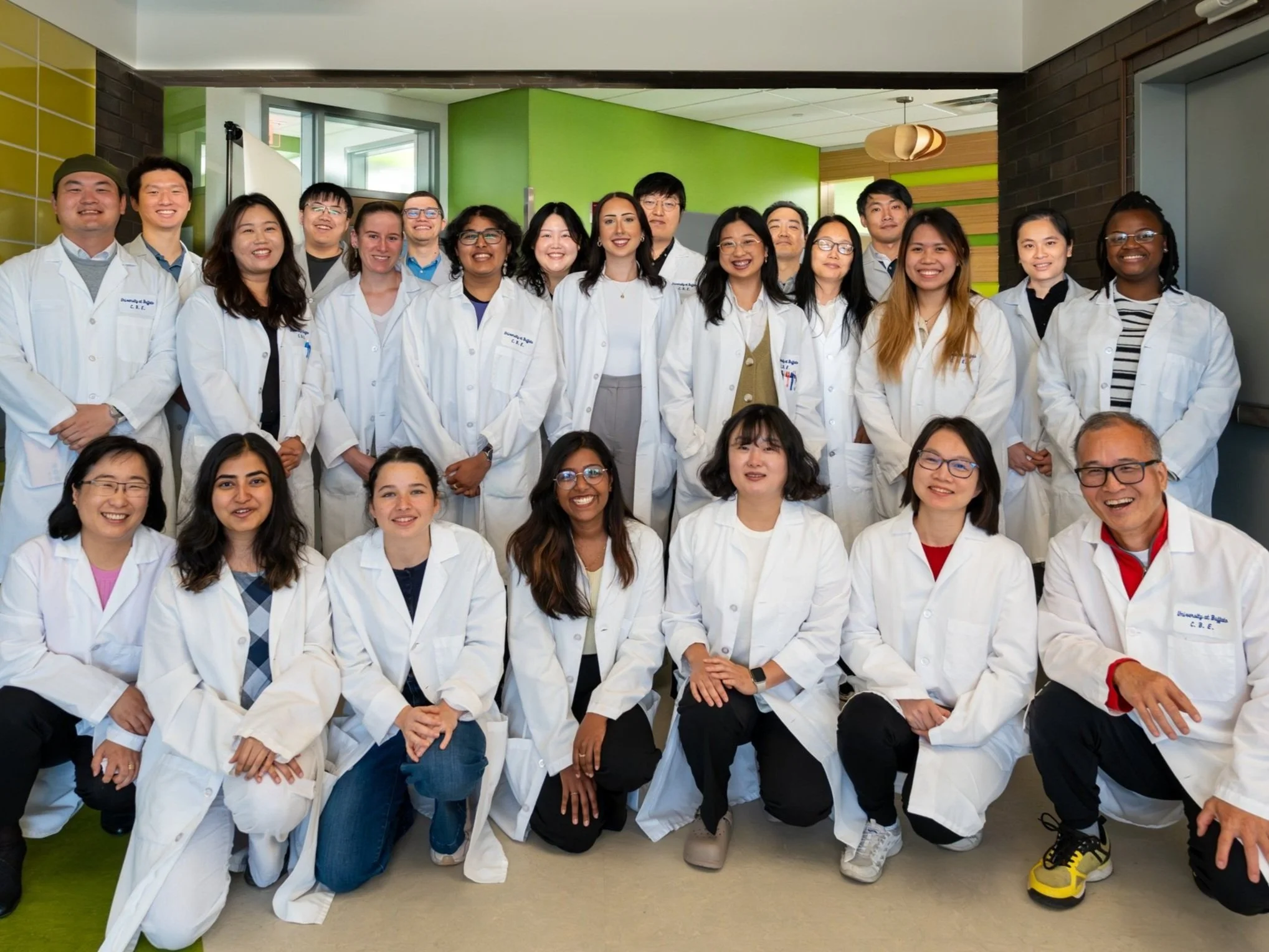
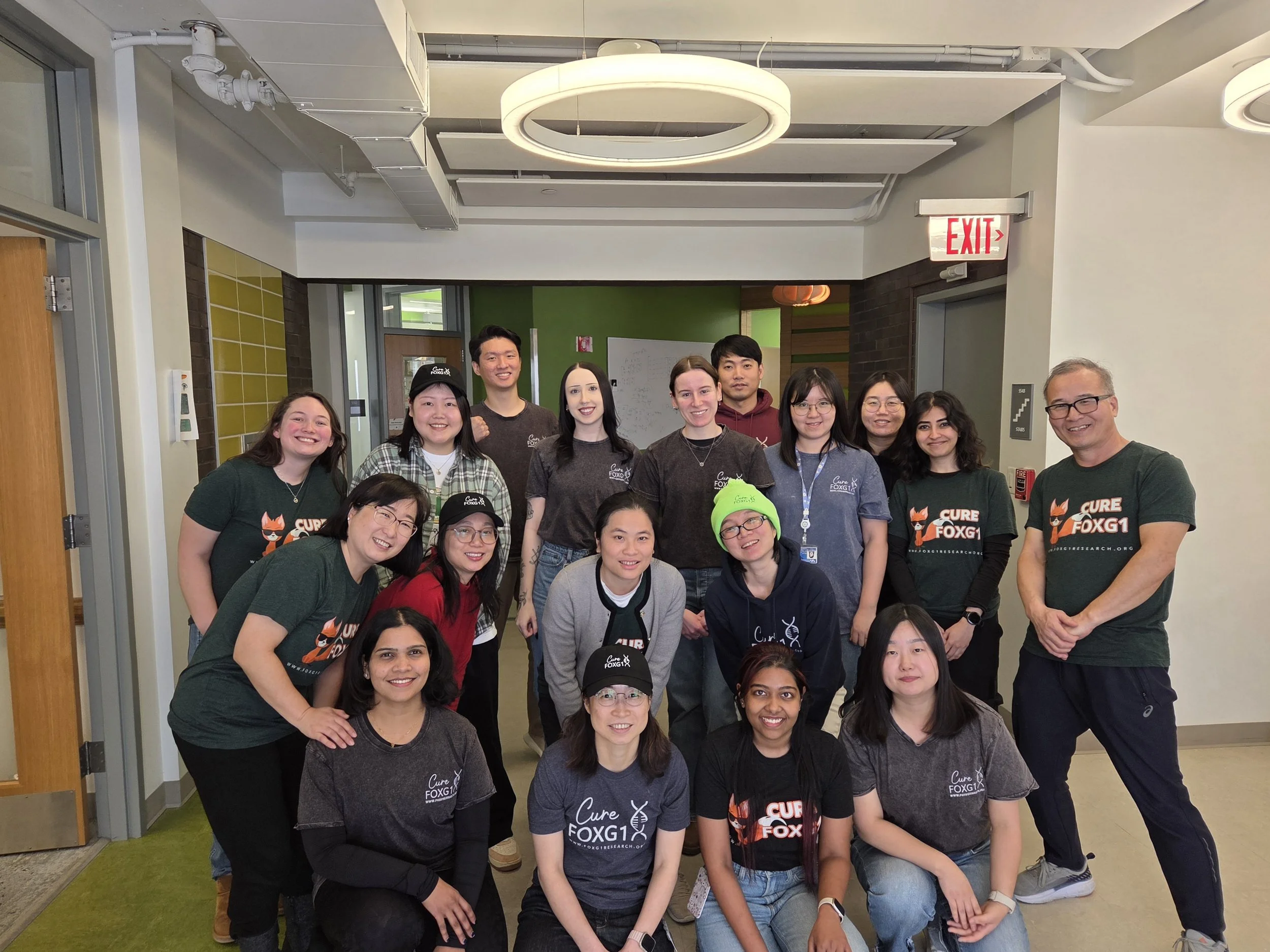
Drs. Soo-Kyung Lee, PhD. and Jae W. Lee, PhD. are the principal investigators of FOXG1 Research Center. Our team is full of dedicated individuals with the common goal of studying FOXG1 Syndrome to find treatment options and further understand the condition.

Our Publications
To learn more details about our research, please refer to our publications.
Media Coverage & Awards
The FOXG1 Research Center is honored to be recognized for its contributions to rare disease research, neuroscience, and the broader scientific community.