
For families living with FOXG1 syndrome, the name of one gene quickly becomes part of everyday life.
FOXG1.
It is one gene. Yet changes to FOXG1 can affect many parts of brain development and function.
That leads to a very natural question: How can a change in one gene have such a big impact?
The answer has a lot to do with the job of FOXG1.
FOXG1 does not have just one role in the brain. Research has shown that it is involved in many steps of brain development. It helps guide how parts of the brain form, when certain brain cells are made, where neurons move, and how different parts of the brain connect and communicate.¹
To understand why this matters, it helps to start at the beginning.
First, What Does the FOXG1 Gene Do?
Genes are like sets of instructions inside our cells. They tell the body how to make proteins, which then carry out important jobs throughout the body.
The FOXG1 gene contains the instructions for making the FOXG1 protein.
FOXG1 is a type of protein called a transcription factor. This is a scientific term for a protein that helps control the activity of other genes.
One way to think about it is that FOXG1 helps cells know which genetic instructions to use, when to use them, and how strongly to use them.
This is important because building a brain requires many different genes and cells to work together at the right times.
Research has connected FOXG1 to several parts of this process. It plays a role in the early formation and organization of the forebrain, the front part of the developing brain that will later include important structures such as the cerebral cortex. It also helps maintain early brain cells that can develop into neurons, helps neurons move to the right places, and plays a role in how brain cells communicate and how nerve fibers become protected with myelin.¹
That is a lot of different jobs.
And it helps explain why researchers are not only studying the FOXG1 gene itself. They are also studying what happens throughout the brain when FOXG1 is changed.
Building a Brain Happens in Steps
The brain does not develop all at once. It is built through a carefully timed series of steps.
First, the brain needs to make the right cells at the right time. Those cells then need to become the right type of brain cell. Many must move to a specific place in the developing brain. Eventually, they need to form connections and communicate with other cells.
FOXG1 plays a role in many parts of this process.
For example, early in brain development, there are special cells called neural progenitor cells. These are early cells that can develop into neurons and other types of brain cells.
The developing brain needs to keep enough of these early cells available while also allowing some of them to begin becoming neurons.
Research has shown that FOXG1 helps with this balance. It helps maintain the supply of these early cells and helps control when they begin developing into neurons.¹
And making a neuron is only the beginning.
Many new neurons must also travel through the developing brain to reach the place where they belong.
This process is called neuronal migration.
Helping Brain Cells Find Their Place
Imagine building a school, but every classroom, hallway, teacher, and student has to arrive in the right place at the right time.
The developing brain faces a much more complex version of this challenge.
The outer part of the brain, called the cerebral cortex, is organized into layers. Different types of neurons belong in different layers and have different jobs.
During brain development, neurons must move into the correct areas and become organized into these layers.
FOXG1 helps with this process.
Research in experimental models has shown that changes to Foxg1 can affect how neurons move and how the layers of the cortex are organized. Research has also shown an important role for Foxg1 in the development of the corpus callosum.²
The corpus callosum is a large bundle of nerve fibers that connects the left and right sides of the brain. You can think of it as a communication bridge that helps the two sides share information.
Differences in the corpus callosum are often seen in people with FOXG1 syndrome.
By studying how Foxg1 affects brain development in research models, scientists can begin to understand the biology behind some of the brain differences seen in FOXG1 syndrome.
The Brain Needs Different Types of Cells to Work Together
The brain contains many types of neurons, and they do not all have the same job.
Some neurons increase activity in the brain. These are called excitatory neurons.
Others help control or calm activity. These are called inhibitory neurons.
A healthy brain depends on these different types of neurons working together in a carefully controlled way.
FOXG1 is involved in the development and organization of both types. Research has connected FOXG1 with how these neurons develop, move to the correct places, and become part of the brain’s communication networks.¹
Researchers are still working to understand exactly how changes in FOXG1 affect these networks and how those changes may connect to features of FOXG1 syndrome.
The important point is that FOXG1 does not affect only one type of brain cell or one moment in development.
Its role reaches across many connected processes.
FOXG1 May Have Important Jobs Beyond Early Brain Development
FOXG1 is often talked about as a gene that is important during early brain development.
That is true, but research suggests its job may continue beyond those early stages.
FOXG1 continues to be active in certain neurons after the brain’s basic structures have formed. Studies in experimental models suggest that it may continue to play a role in the structure of neurons, communication between brain cells, and the brain’s ability to strengthen connections between cells.¹
Researchers are also studying the connection between FOXG1 and myelination.
Myelin is a protective coating that forms around nerve fibers. It helps messages travel quickly and efficiently through the brain, a little like insulation around an electrical wire.
Delayed myelination has been observed in some people with FOXG1 syndrome. Research is helping scientists explore how FOXG1 activity in neurons may affect the cells responsible for making myelin.¹
This is another example of how connected the brain is.
A change in one gene can affect a cell directly. That cell may also communicate differently with other cells, creating effects that reach further through the developing brain.
Why Do Different FOXG1 Variants Matter?
Not every person with FOXG1 syndrome has the exact same genetic change.
There are different types of FOXG1 variants, and they can occur in different locations within the gene. Researchers are working to understand whether different variants affect the FOXG1 protein in different ways.¹
This is an important question.
A 2025 study from the FOXG1 Research Center looked closely at one specific frameshift variant using a mouse model. A frameshift variant is a genetic change that alters how the instructions for making a protein are read.
Researchers found that this variant produced a shortened piece of the FOXG1 protein. Their findings suggested that this protein fragment did not simply disappear. Instead, it interacted with the full-length FOXG1 protein and changed where FOXG1 was located inside cells. The study also found changes related to early brain cell identity and the movement of neurons in the developing brain.³
This study helps show why researchers look closely at specific FOXG1 variants.
The question may not always be as simple as, “How much FOXG1 protein is there?”
Researchers may also need to ask: Is an altered protein being made? What does it do inside the cell? Does it interact with the typical FOXG1 protein? Does it affect certain parts of brain development differently?
These are some of the questions that continued FOXG1 research can help answer.
Why Does Understanding All of This Matter?
For families, research about cells, proteins, and genes can sometimes feel very far away from everyday life.
But understanding how FOXG1 works is an important part of therapeutic research.
Researchers need to understand what is happening before they can determine the best ways to address it.
That means asking questions such as:
What does FOXG1 do in different types of brain cells?
When is FOXG1 most important?
What happens inside a cell when FOXG1 is changed?
How are other cells and parts of the brain affected?
Do different FOXG1 variants cause different changes inside cells?
Each answer adds another piece to the larger picture.
One Gene, Many Questions
FOXG1 is one gene, but its role in the brain is complex.
It is involved in how the forebrain develops, how early brain cells are maintained, when neurons are created, where neurons move, how the cortex is organized, how different parts of the brain connect, and how different types of brain cells work together. Research also suggests that FOXG1 may continue to have important roles beyond the earliest stages of brain development.¹
There is still much to learn.
At the FOXG1 Research Center, research continues to explore what happens when FOXG1 is changed, from the level of genes and proteins to cells, brain structures, and behavior.
For families, the science can be complex. Our goal is to make that science easier to understand while staying true to what the research actually shows.
The more researchers learn about the many roles of FOXG1, the clearer the picture of FOXG1 syndrome becomes. And each new piece of knowledge helps researchers ask better, more focused questions about what comes next.
References
1. O’Shea H, Collins Hutchinson ML, Lee JW, Lee SK. Integrating molecular studies and clinical disease models to provide mechanistic insight into neurodevelopment: guidance from FOXG1 Syndrome. Developmental Biology. 2026;535. DOI: 10.1016/j.ydbio.2026.04.005.
2. Cargnin F, Kwon JS, Katzman S, Chen B, Lee JW, Lee SK. FOXG1 Orchestrates Neocortical Organization and Cortico-Cortical Connections. Neuron. 2018;100:1083–1096. DOI: 10.1016/j.neuron.2018.10.016.
3. Jeon S, Park J, Moon JH, et al. The patient-specific mouse model with Foxg1 frameshift mutation provides insights into the pathophysiology of FOXG1 syndrome. Nature Communications. 2025;16:4760. DOI: 10.1038/s41467-025-59838-4.
One small recommendation for the website: I would make the superscript numbers clickable links to the papers if your CMS allows it. That keeps the blog clean for families while still making the research easy to access for anyone who wants to read further.

FOXG1 Research Center is dedicated to understanding and finding treatments for FOXG1 syndrome and other neurodevelopmental disorders.
Our Team
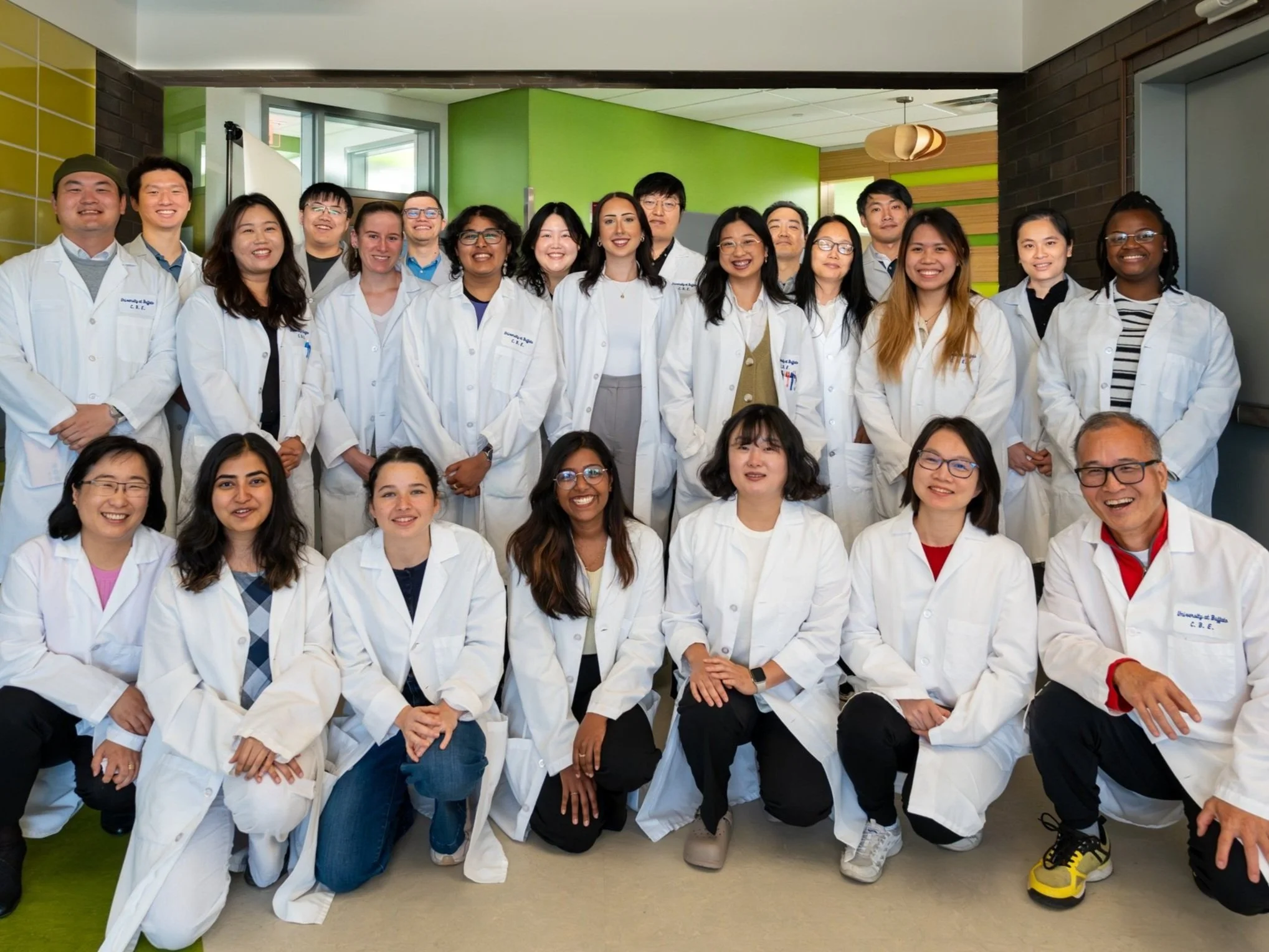
Drs. Soo-Kyung Lee, PhD. and Jae W. Lee, PhD. are the principal investigators of FOXG1 Research Center. Our team is full of dedicated individuals with the common goal of studying FOXG1 Syndrome to find treatment options and further understand the condition.

Our Publications
To learn more details about our research, please refer to our publications.
Media Coverage & Awards
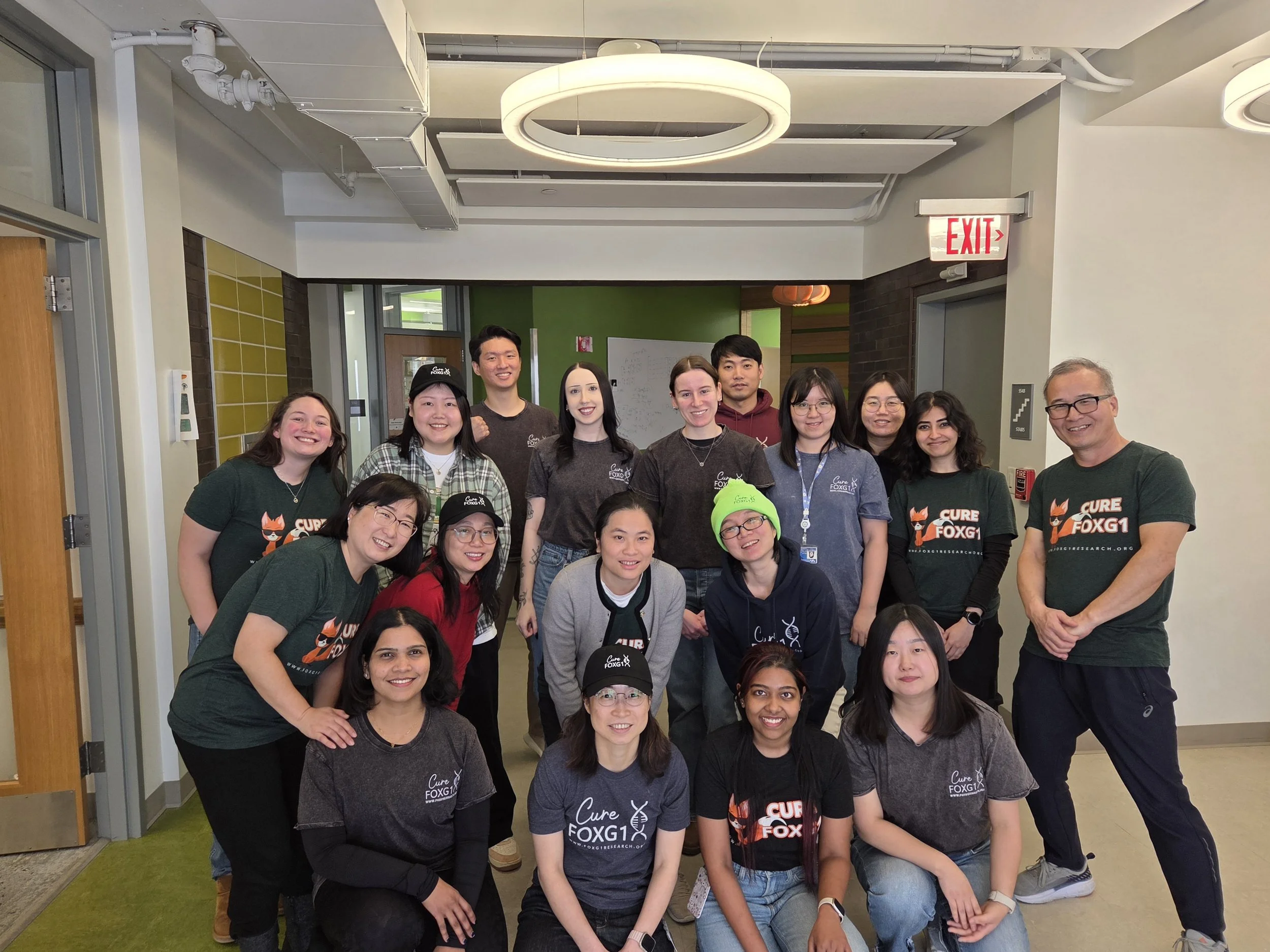
The FOXG1 Research Center is honored to be recognized for its contributions to rare disease research, neuroscience, and the broader scientific community.