Meet Emmanuel Vargas Paniagua, The Scientist Who Never Stopped Asking "Why?"
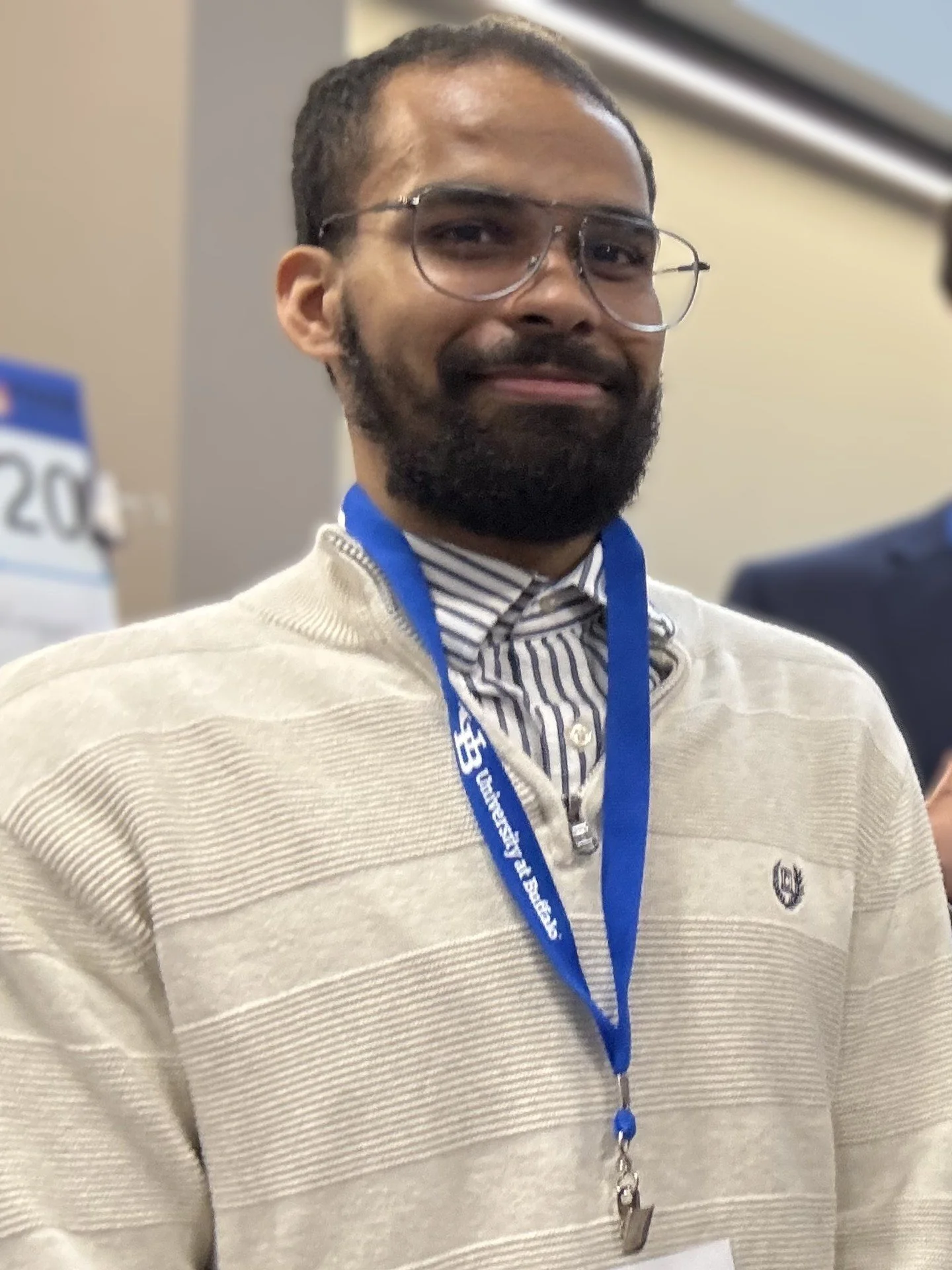
Emmanuel at the 2026 Spotlight Symposium at the University at Buffalo.
Some scientists discover their passion in a classroom. For Emmanuel Vargas Paniagua, it started much earlier.
"I was the kid who would constantly ask 'why,'" Emmanuel said. "I would never feel satisfied with the answers I was given."
His curiosity didn't stop with childhood. Whether he was asking questions about the world around him or challenging explanations that didn't quite make sense, Emmanuel always wanted to understand how things worked.
His mother even joked that he should become a lawyer because he loved questioning everything.
Instead, those questions led him down a different path.
Today, Emmanuel is a second-year Ph.D. student at the FOXG1 Research Center, where he spends his days investigating one of the most complex genes involved in brain development.
Discovering a Passion for Research
Born in the Dominican Republic, Emmanuel moved to Brooklyn, New York, when he was ten years old before later living in New Jersey. He eventually attended Gettysburg College in Pennsylvania, where he earned degrees in biology and psychology while minoring in neuroscience.
Although he always knew he wanted a career in science, he wasn't immediately sure research was the right fit.
Following the advice of his professors, Emmanuel decided to gain hands-on laboratory experience before applying to graduate school. He joined the Anikeeva Lab at MIT as a research technician, where he worked alongside graduate students and researchers on a variety of neuroscience projects.
That experience changed everything.
"That's when I realized I really could be a researcher," he said.
Like many early-career scientists, Emmanuel questioned whether he was capable of making meaningful contributions to research. Learning new techniques wasn't always easy, and there were moments when he doubted himself.
Then came an important milestone.
The first scientific paper he contributed to was accepted for publication.
Seeing his work become part of the scientific literature gave him something he hadn't fully had before: confidence.
"It made me realize I could contribute," he said. "That's when I knew I wanted to pursue graduate school."
Finding the Right Place
When Emmanuel began the Biomedical Sciences Ph.D. program at the University at Buffalo, he rotated through several research labs.
One stood out immediately.
Dr. Soo-Kyung Lee's lab wasn't focused on answering just one question. Instead, researchers were studying FOXG1 syndrome from many different perspectives, exploring everything from genes and proteins to brain development, behavior, and potential therapies.
That multidisciplinary approach immediately resonated with Emmanuel.
"Everything connects," he explained. "Everyone is studying something different, but it all comes back together."
Just as importantly, the research had a clear purpose.
Learning more about FOXG1 syndrome helped him understand the profound impact the condition has on children and their families. He realized that every experiment in the lab had the potential to contribute to something much larger.
"There was an end goal," Emmanuel said. "The research has the potential to truly help people."
A Gene More Complex Than He Expected
Since joining the FOXG1 Research Center, Emmanuel says one thing has surprised him more than anything else.
"I didn't realize how complicated the FOXG1 gene is," he said.
The more he learned, the more he realized just how many different roles FOXG1 plays in brain development and just how many questions remain unanswered.
What makes the lab especially exciting, he says, is seeing how every researcher contributes a different piece of the puzzle.
Some study genetics. Others investigate brain development, behavior, hormones, or potential therapies.
"Everyone is working on something completely different," Emmanuel said. "But then everything gets related back together. It's really interesting to see how diverse the research is, and Dr. Lee brings it all together."
That collaboration is one of the things he enjoys most about working at the FOXG1 Research Center.
Every Day Looks Different
As a second-year Ph.D. student, no two days are exactly alike.
Some days are spent in the laboratory staining proteins, imaging brain tissue, or genotyping research models. Other days involve analyzing data, reading scientific literature, or discussing ideas with fellow researchers.
He's currently assisting Dr. Bora Lee with projects exploring the role of the pituitary gland in FOXG1 syndrome, an area of research that has often been overlooked.
For Emmanuel, every experiment is another opportunity to better understand the biology behind FOXG1 syndrome and the many questions researchers are still working to answer.
Encouraging the Next Generation of Scientists
Looking back, Emmanuel understands why many students question whether they're "good enough" to become researchers.
His advice is simple.
Don't decide before you've given yourself the chance.
"You can't really rationalize it before you've had the experience," he said. "You have to keep asking questions, keep learning, and keep trying."
For Emmanuel, confidence didn't come before research.
It came through doing the work, learning from setbacks, and realizing that progress happens one step at a time.
Still Asking "Why?"
Although Emmanuel still considers himself just as curious as he was growing up, he says his perspective has changed.
"I still ask 'why' all the time," he said. "The difference now is that I understand I can't just keep asking why. I have the opportunity to help answer some of those questions."
That opportunity is what motivates him every day.
The little boy who once filled his days asking endless questions is now helping uncover answers that could deepen our understanding of FOXG1 syndrome and one day improve the lives of children and families around the world.
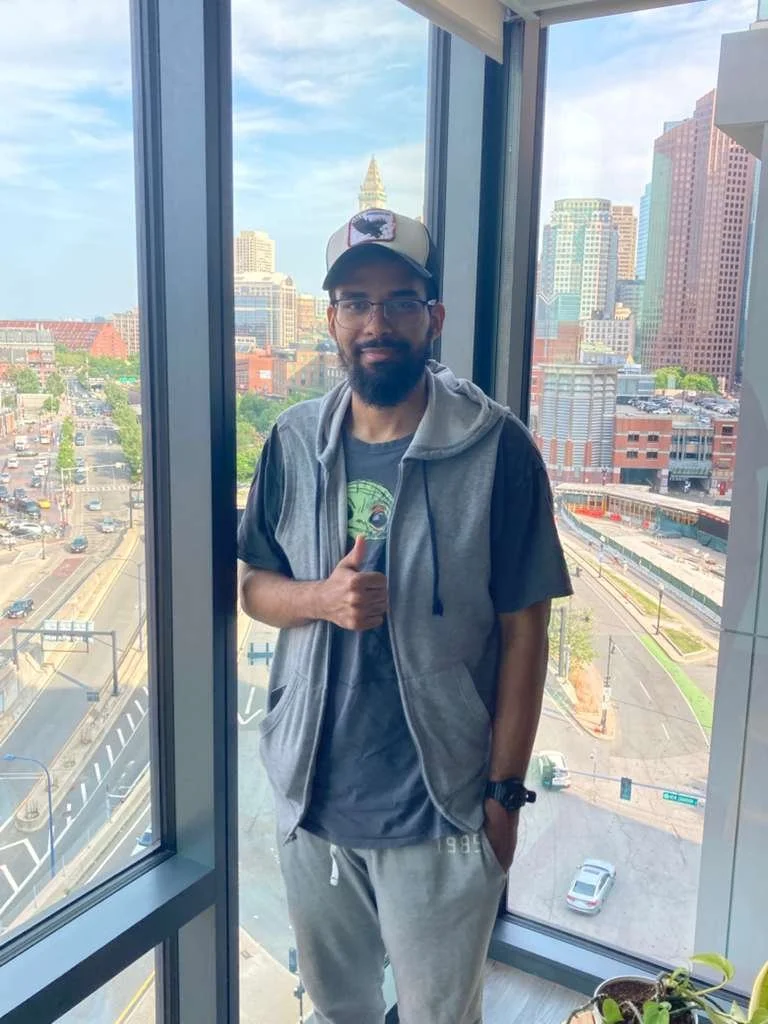
Emmanuel pictured with a view of Boston, Massachusetts, in the background.

FOXG1 Research Center is dedicated to understanding and finding treatments for FOXG1 syndrome and other neurodevelopmental disorders.
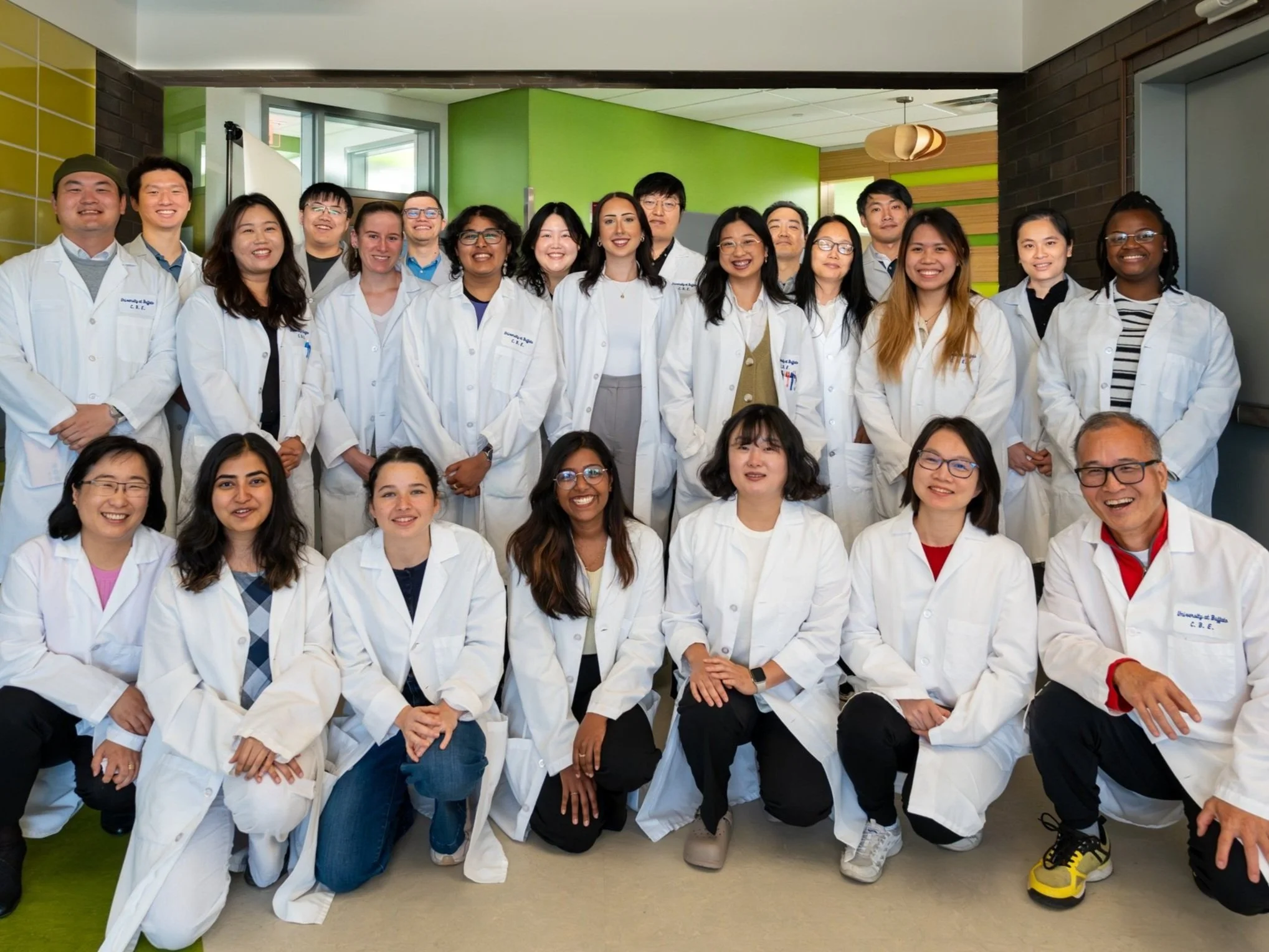
Our Team
Drs. Soo-Kyung Lee, PhD. and Jae W. Lee, PhD. are the principal investigators of FOXG1 Research Center. Our team is full of dedicated individuals with the common goal of studying FOXG1 Syndrome to find treatment options and further understand the condition.

Our Publications
To learn more details about our research, please refer to our publications.
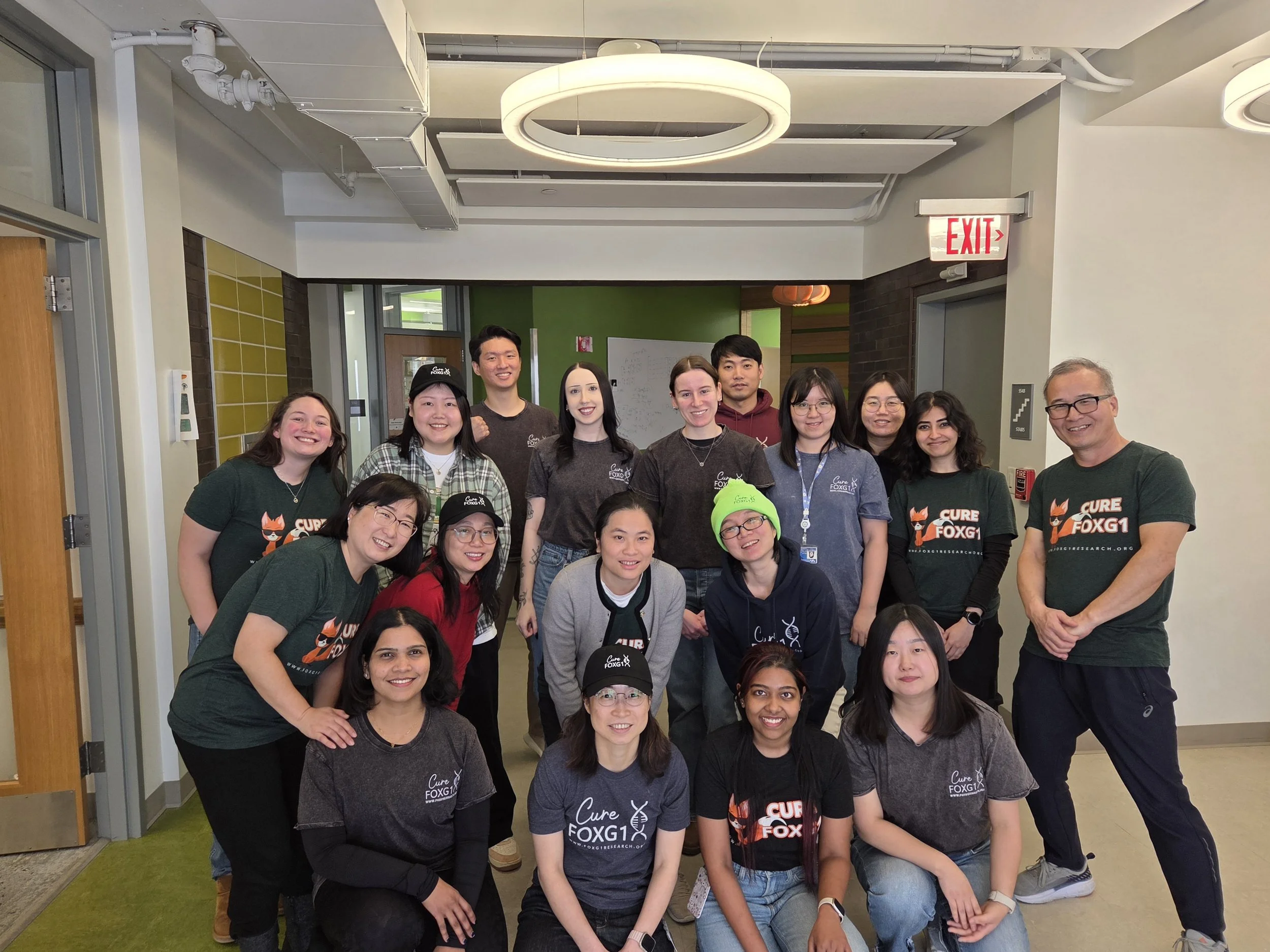
Media Coverage & Awards
The FOXG1 Research Center is honored to be recognized for its contributions to rare disease research, neuroscience, and the broader scientific community.