Why Does Research Take So Long?
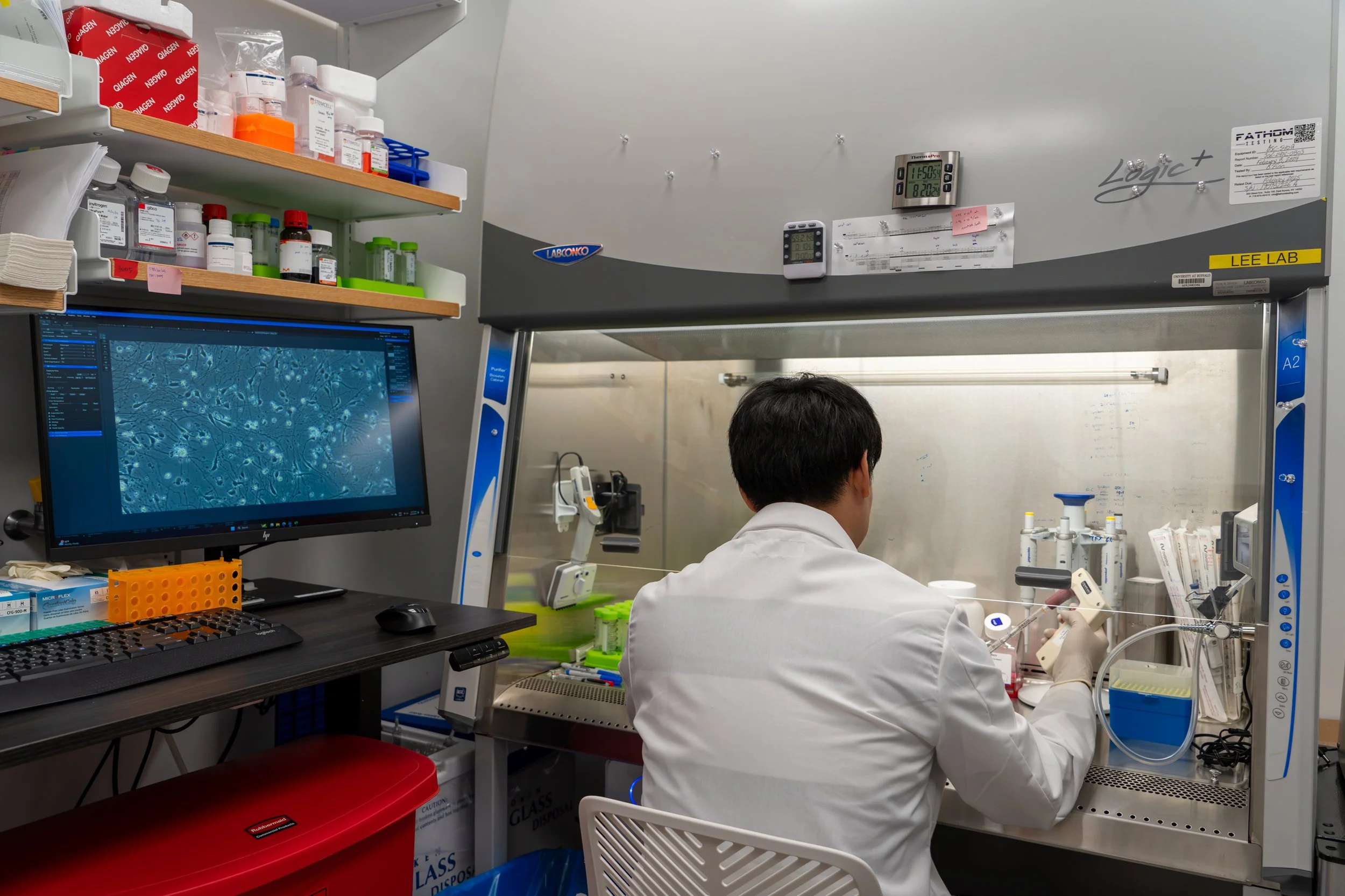
Dr. Seon-Ung Hwang working in the cell culture room of the FOXG1 Research Center.
Why Does Research Take So Long?
This month, the FOXG1 community reached a milestone years in the making: the first participant received FRF-001, an investigational gene therapy for FOXG1 syndrome.
For families who have followed FOXG1 research for years, a moment like this can feel incredibly exciting.
It can also put something into perspective.
Before the first participant could ever receive an investigational therapy, researchers had already spent years asking questions, conducting experiments, repeating studies, gathering evidence, studying safety, and carefully deciding what needed to happen next.
So why does research take so long?
The answer is not that scientists discover something promising and then simply wait years to act on it. Those years are filled with work.
Scientific research moves forward by building evidence, one step at a time. And before researchers can move to the next step, they need to understand what the evidence from the step before it is telling them.
It Starts With Understanding the Problem
Long before researchers can think about a possible treatment, they first need to understand what they are trying to treat. In FOXG1 syndrome, that means asking questions about the FOXG1 gene itself.
What does FOXG1 normally do? How does it help guide brain development? What happens when the gene does not work as expected? How might those changes contribute to the symptoms individuals with FOXG1 syndrome experience?
Answering questions like these can take years of research. But this early work matters because it helps researchers decide what questions to ask next. Sometimes an experiment provides an answer. Sometimes it creates five new questions.That is how science moves forward.
One Promising Result Is Just the Beginning
Imagine that researchers conduct an experiment and see exactly what they hoped to see. That’s exciting, but it’s not usually enough to move immediately to the next stage. Scientists need to know that a result is reliable.
Can they see it again when the experiment is repeated? Does the finding hold up under different conditions? Do other experiments point toward the same conclusion?
Repeating and validating findings helps researchers separate a meaningful discovery from something that may have happened by chance. It’s one of the reasons research can sometimes look slow from the outside.
Inside the lab, however, repeating an experiment is not simply doing the same work over again. It is part of building confidence in what researchers think they have discovered. The stronger that evidence becomes, the better prepared researchers are to decide what should come next.
Researchers Learn From What Doesn't Work, Too
Not every experiment produces the result researchers expect. That does not necessarily mean the experiment was a failure. An unexpected result can reveal something researchers did not understand before. It might cause them to change a hypothesis, adjust an experiment, explore a different approach, or ask an entirely new question.
Research rarely follows a perfectly straight line from discovery to treatment. There are wrong turns, new questions, repeated experiments, and ideas that need to be adjusted along the way. All of that is part of the process.
Before a Treatment Reaches People, There Are New Questions to Answer
Eventually, years of research may point toward a possible treatment.But something that looks promising in the laboratory is not automatically ready to be tested in a person. This begins another important stage of research.
Before clinical testing, researchers conduct preclinical studies designed to learn more about a potential therapy and answer important questions about safety. Depending on the therapy, this can include laboratory studies and studies using animal models. Researchers gather information about things like how a potential treatment works, how it should be given, what dose might be appropriate, and whether it could cause harmful effects.
For an investigational therapy to move into clinical research in the United States, the sponsor must submit an Investigational New Drug application, or IND, to the FDA. That application includes information from preclinical studies, manufacturing information, and a plan for how the therapy will be studied in people. The FDA reviews this information before a clinical trial can proceed.
In other words, getting from “this idea looks promising” to “we are ready to study this in a person” requires an enormous amount of evidence.
Even Making the Treatment Takes Time
There is another part of research that families may not hear about as often: manufacturing.
When a potential therapy reaches the point where it may be given to people, researchers cannot simply make a larger batch of what they used during an early laboratory experiment.
How a therapy is produced matters. Regulators evaluate information about how an investigational therapy is made and the controls used to maintain its identity, strength, quality, and purity. Manufacturing information is also part of what sponsors provide before human clinical research begins.
That means the path toward a clinical trial is not only about proving that an idea works in the laboratory. Researchers also need to be able to turn that idea into something that can be carefully and consistently studied in people.
Then Comes a Moment Like This One
All of those steps are what make a milestone like the first participant receiving FRF-001 so meaningful! It’s easy to see the moment someone receives an investigational therapy.
What is harder to see are the years of work that came before it. The experiments. The repeated studies.The questions that led to more questions. The preclinical research. The safety testing. The manufacturing work. The clinical trial planning. The regulatory review. And the work of researchers, clinicians, advocates, families, and organizations who helped move the science forward.
The first participant receiving FRF-001 does not mean the research is finished. In many ways, it means a new kind of research is beginning.
The Clinical Trial Is Another Stage of Learning
Clinical trials are research. Once an investigational therapy begins being studied in people, researchers can start answering questions that could not be fully answered in the laboratory.
Clinical trials are carefully designed around specific questions, including who can participate, how a treatment will be given, what will be measured, how long participants will be followed, and how the data will be evaluated. Early clinical research places particular emphasis on understanding safety and dosage, while later research can gather more information about whether a treatment provides a benefit and what risks may be associated with it.
That is why the first participant receiving FRF-001 is both an extraordinary milestone and a beginning.
Researchers now have the opportunity to learn from the clinical trial itself. Each piece of information collected can help build the evidence needed to understand what should happen next.
Why Careful Research Matters
For families waiting for treatments, research can never move fast enough. That feeling matters.
When someone you love is living with a rare disorder, years are not just numbers on a research timeline. They are years of your child's life. Researchers feel the urgency of finding answers, too.
But moving quickly and moving carefully have to happen together. Every experiment that is repeated, every safety question that is investigated, every piece of data that is reviewed, and every unexpected result that sends researchers back to the lab has a purpose.
The goal is not simply to reach the next milestone as quickly as possible. It is to build enough evidence to take the next step responsibly.
The FDA describes drug development as a process that moves from discovery and development to preclinical research, clinical research, regulatory review, and eventually continued safety monitoring if a treatment is approved. Each stage answers different questions and builds on the information gathered before it.
Years of Work, One Step at a Time
Scientific progress is often remembered through big moments. A discovery. A publication. A clinical trial. A first participant.
But those moments are possible because of thousands of smaller ones that happened first. For the FOXG1 community, the first participant receiving FRF-001 represents one of those extraordinary milestones.
It also gives us an opportunity to look back at everything research requires before reaching a moment like this, and to recognize how much there is still to learn. Research takes time because each answer has to give scientists enough confidence to safely ask the next question. And one carefully answered question at a time is how research moves forward!

FOXG1 Research Center is dedicated to understanding and finding treatments for FOXG1 syndrome and other neurodevelopmental disorders.
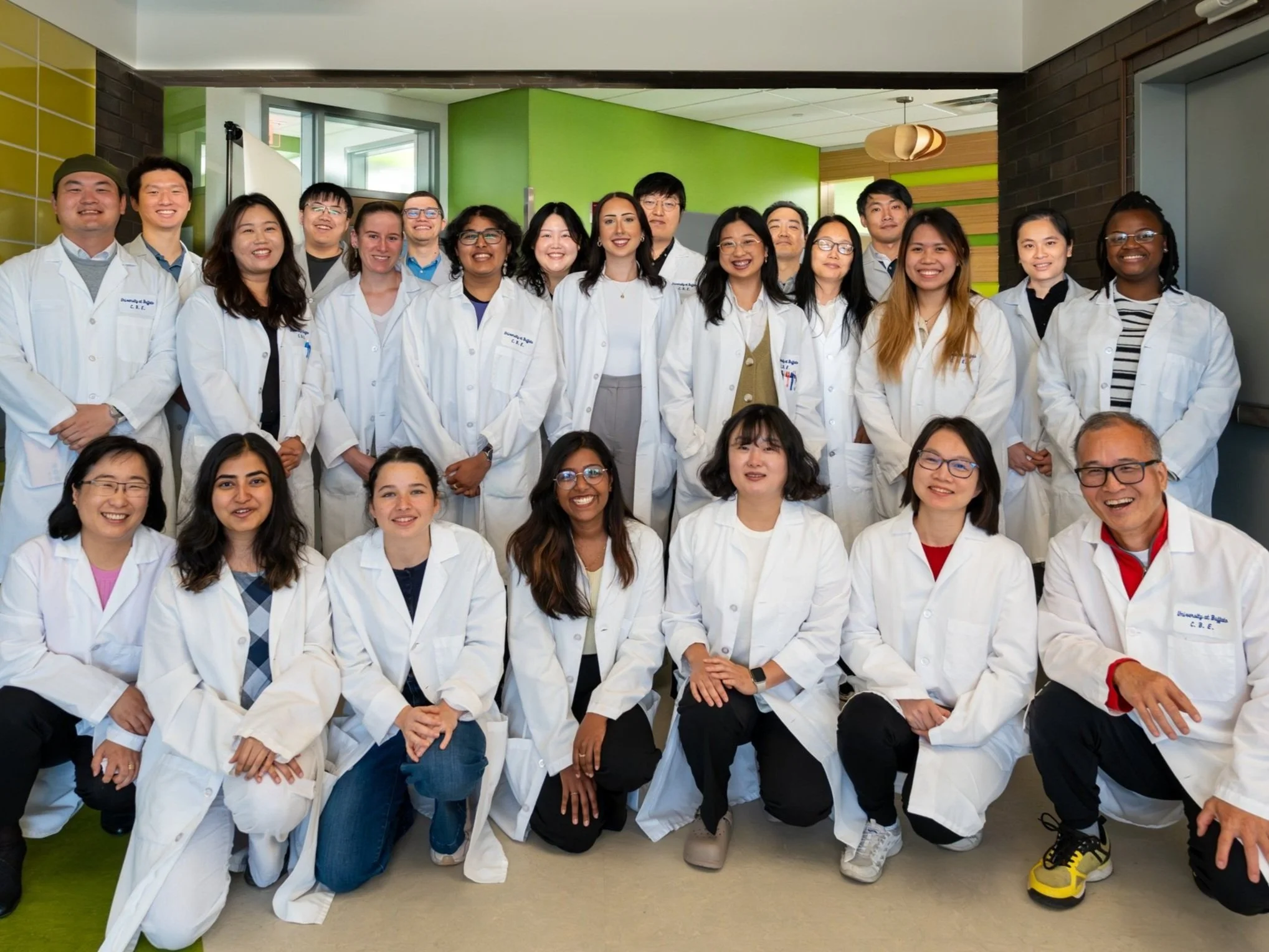
Our Team
Drs. Soo-Kyung Lee, PhD. and Jae W. Lee, PhD. are the principal investigators of FOXG1 Research Center. Our team is full of dedicated individuals with the common goal of studying FOXG1 Syndrome to find treatment options and further understand the condition.

Our Publications
To learn more details about our research, please refer to our publications.
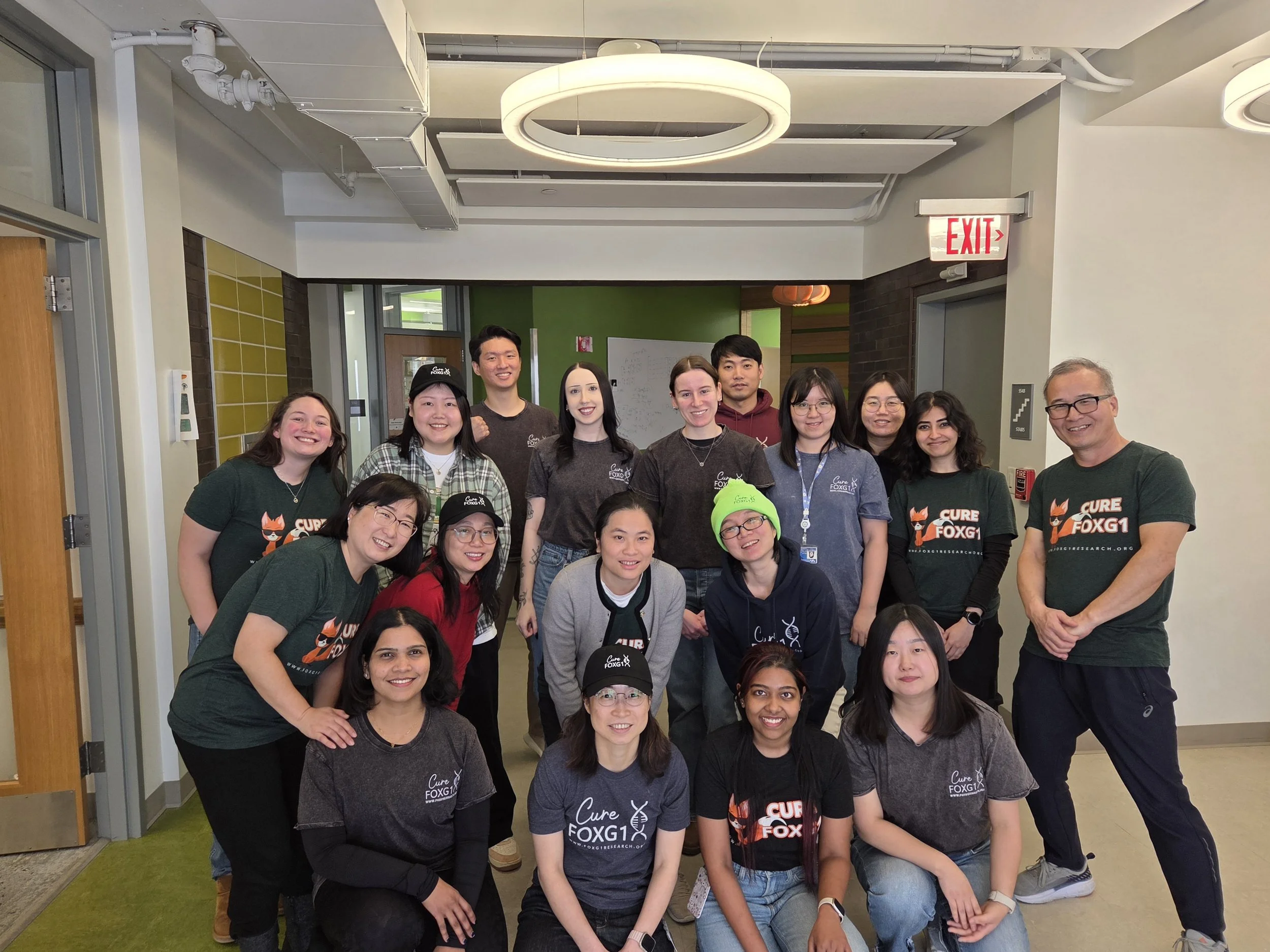
Media Coverage & Awards
The FOXG1 Research Center is honored to be recognized for its contributions to rare disease research, neuroscience, and the broader scientific community.