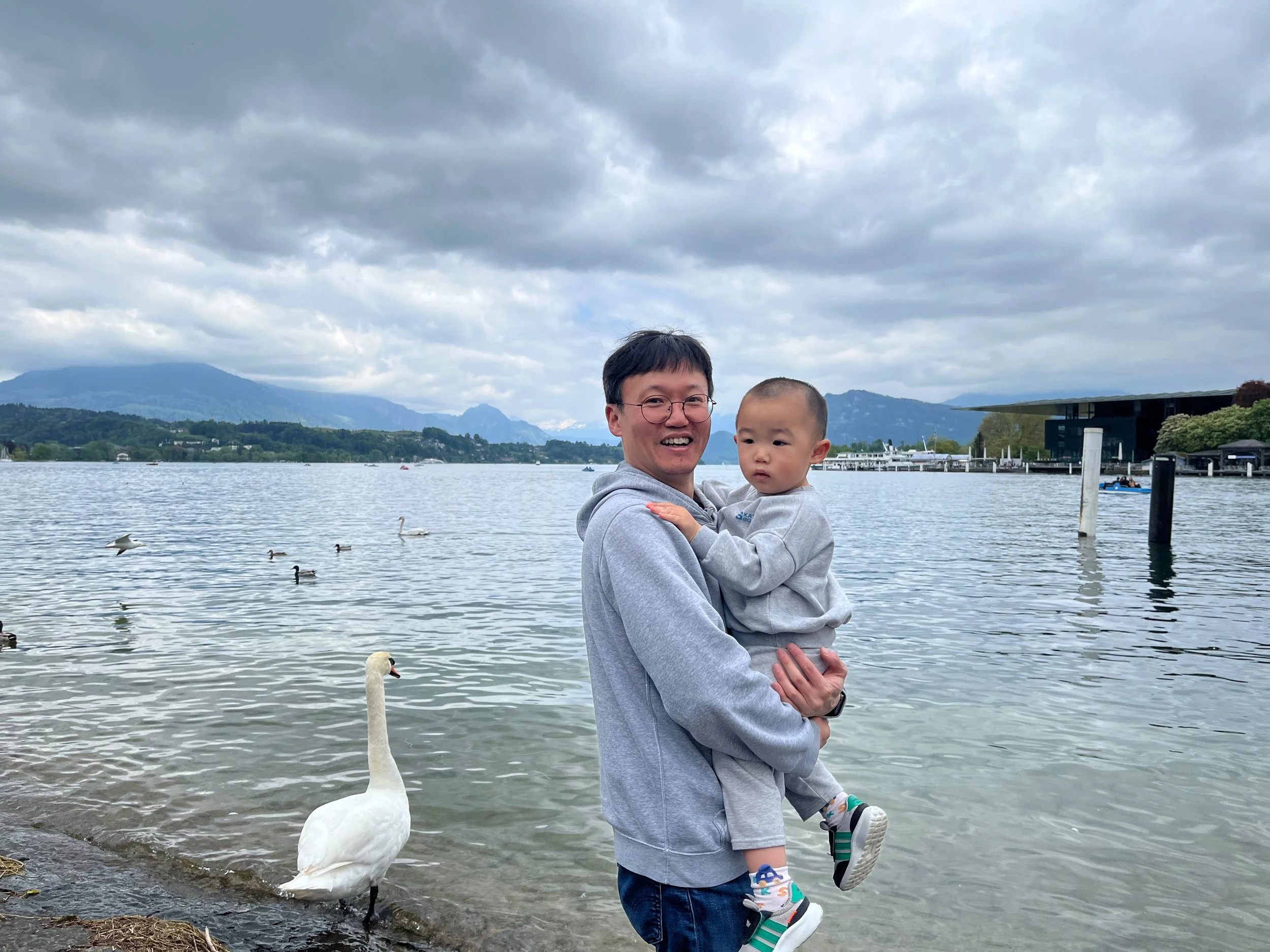
Shin and his son at Lake Lucerne, Switzerland, 2024
A scientist whose dedication helped shape the FOXG1 Research Center from the very beginning
Some scientists join a research program. Others help build it. For Shin Jeon, his story with the Lee labs began long before the FOXG1 Research Center even existed. What started as a shared scientific curiosity eventually grew into a decade of collaboration, discovery, and deep personal connection that helped lay the foundation for the work happening today.
A Journey Shaped by Curiosity
Shin grew up in South Korea, where he discovered early on that science felt less like a subject and more like a calling. He went on to earn his BS, MS, and PhD in Biological Sciences from Seoul National University, training in molecular immunology and developing the persistence and creativity that research demands.
His dream was always to become a scientist who could uncover something new. By the time he joined the Lee labs at OHSU in Oregon, that dream had taken him far from home, but it felt like the start of something meaningful.
Before FOXG1 Research Began
When Shin first joined the Lees, their work together was not centered on FOXG1. At the time, his research focused on the autonomic nervous system and spinal cord development. He was deeply invested in understanding how the nervous system functions and maintains essential life processes.
Years later, when the Lees made the decision to begin FOXG1 research, Shin was right there with them. He helped transition the lab into a new scientific direction, contributed to the creation of FOXG1 mouse models, and supported the early stage work that allowed the program to take off.
Although he never draws attention to himself, Shin’s long-standing involvement has quietly supported each step the lab has taken. He has been there through every shift in focus, every new model, and every milestone.
Building a New Start in Buffalo
In 2019, the Lee lab moved from Oregon to Buffalo. Only two members made the move with them. Shin was one of them. Together they built a new lab environment from the ground up, setting up equipment, training new members, establishing new processes, and laying the groundwork for the FOXG1 Research Center that families know today.
Then came the pandemic. Experiments needed to continue despite strict distancing rules. Shin recalls going to UB South Campus with Dongjun and Jaein, wearing masks, staying six feet apart, and quietly running mouse behavior tests because the research mattered too much to pause. If one person fell sick, the others continued because the data had to be collected. That season tested everyone, but it also strengthened the sense of purpose that guides the lab today.
Why the FOXG1 Mission Matters to Him
As the FOXG1 research program grew, so did Shin’s personal connection to the work. He has known the Lees for more than ten years. He watched their daughter Yuna grow up. He knew Joon when he was tiny. Weekends often included shared meals, conversations, and a sense of family that naturally shaped how he saw the research.
He describes it simply. Their lives moved forward together, and so did the science.
The work became deeply meaningful. FOXG1 syndrome affects essential systems within the body, including the nervous system he has studied for years. Understanding these connections could help families in ways that matter every day. That alignment of purpose made the research feel personal, not just professional.
The Questions He is Working to Answer
Today, Shin’s focus is on one of the most common challenges families describe. The gastrointestinal difficulties so many FOXG1 individuals face, including reflux, diarrhea, and constipation. FOXG1 is not expressed in the gut, which means something else is driving these symptoms.
Shin believes the answer may lie in the communication between the brain and the enteric nervous system. Using FOXG1 knock-in mouse models, he is working to uncover the molecular links that might explain why these issues occur. His goal is not only to understand the biology, but to open the door to solutions that could improve daily comfort and quality of life.
For him, that possibility is a powerful motivator. He hopes that his basic science findings will one day move into clinical studies and eventually support real change for children and adults living with FOXG1 syndrome.
The Role He Plays in the Lab Today
Even though he now lives in Philadelphia, Shin remains a core part of the FOXG1 Research Center. Every morning begins with a Zoom meeting with the Lees and the team. He reviews ongoing experiments, organizes data, guides experimental design, and supports each member as they move their projects forward.
He still visits Buffalo when he can, and even from afar, he acts as a steadying presence for the group. Graduate students, postdocs, and new members often rely on him for clarity, direction, and perspective. He sees their growth as one of the most rewarding parts of his work.
What the Community has Taught Him
Over the years, Shin’s interactions with FOXG1 families have reshaped the way he thinks about research. Their strength, their progress, their challenges, and their stories remind him every day why the work matters. He feels that he and the families have grown together, each influencing the other in meaningful ways.
That connection continues to anchor his motivation. He says that understanding how closely his research affects their lives gives him the drive to keep asking harder questions and exploring new possibilities.
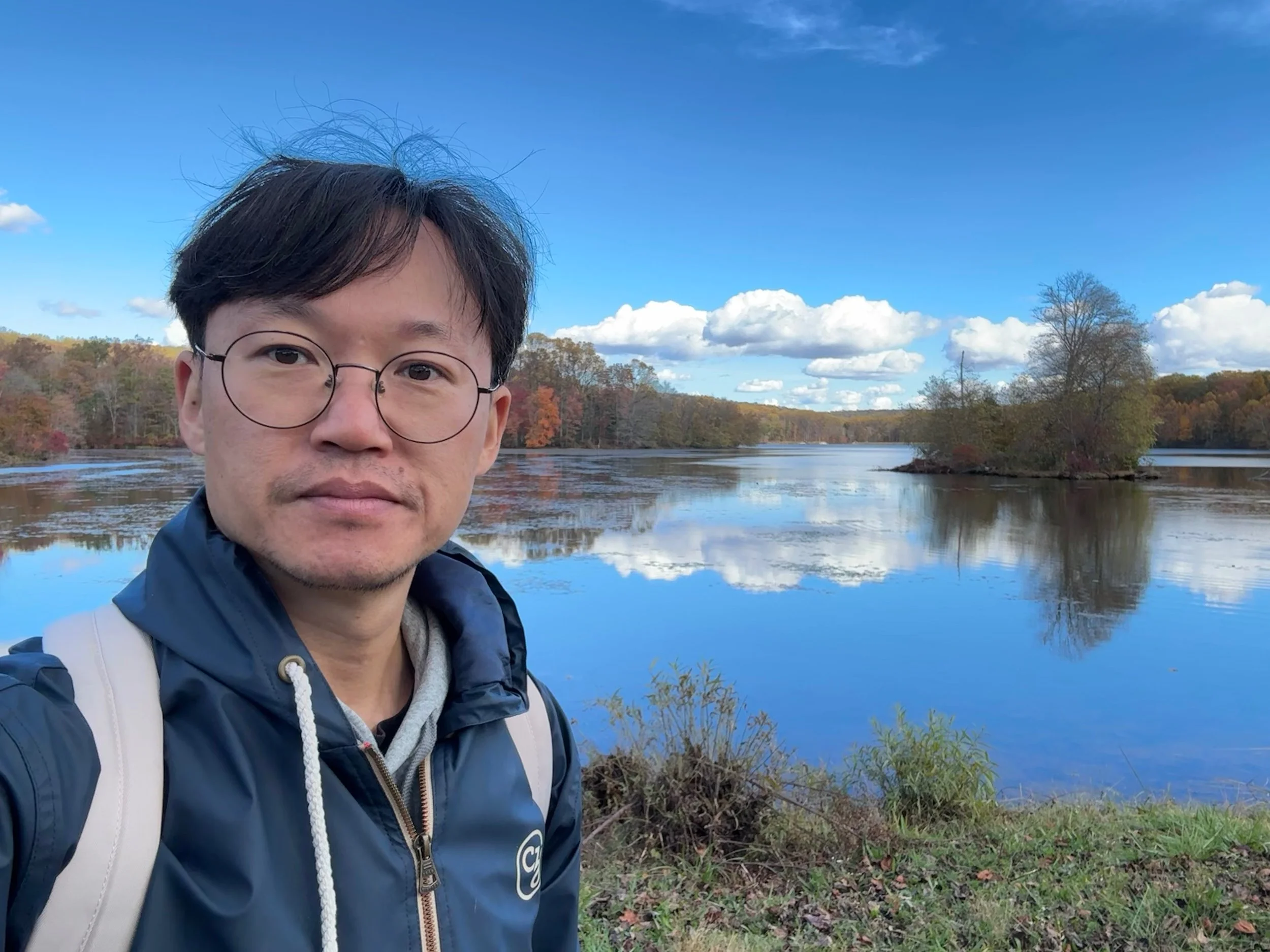
Shin at Hopewell Lake, Pennsylvania- Fall, 2025
Life Beyond the Microscope
When he is not analyzing data, Shin is usually with his family or working on home renovations. Browsing the aisles of Home Depot has become one of his favorite ways to unwind. His wife is also a neuroscientist, something he describes as a gift because it allows them to talk through ideas and challenges with a shared understanding.
A Lasting Impact on FOXG1 Research
Shin often describes himself as a nomad scientist, shaped by each environment he has lived and worked in. But to the FOXG1 Research Center, he is something far more. He is a partner in discovery. A collaborator who brings steadiness to the team. A scientist whose fingerprints are on nearly every stage of the research program’s growth.
His journey is a reminder that science is built not only through experiments, but through people who care deeply about the work and the lives it touches.
The FOXG1 community is stronger because Shin is part of it.

FOXG1 Research Center is dedicated to understanding and finding treatments for FOXG1 syndrome and other neurodevelopmental disorders.
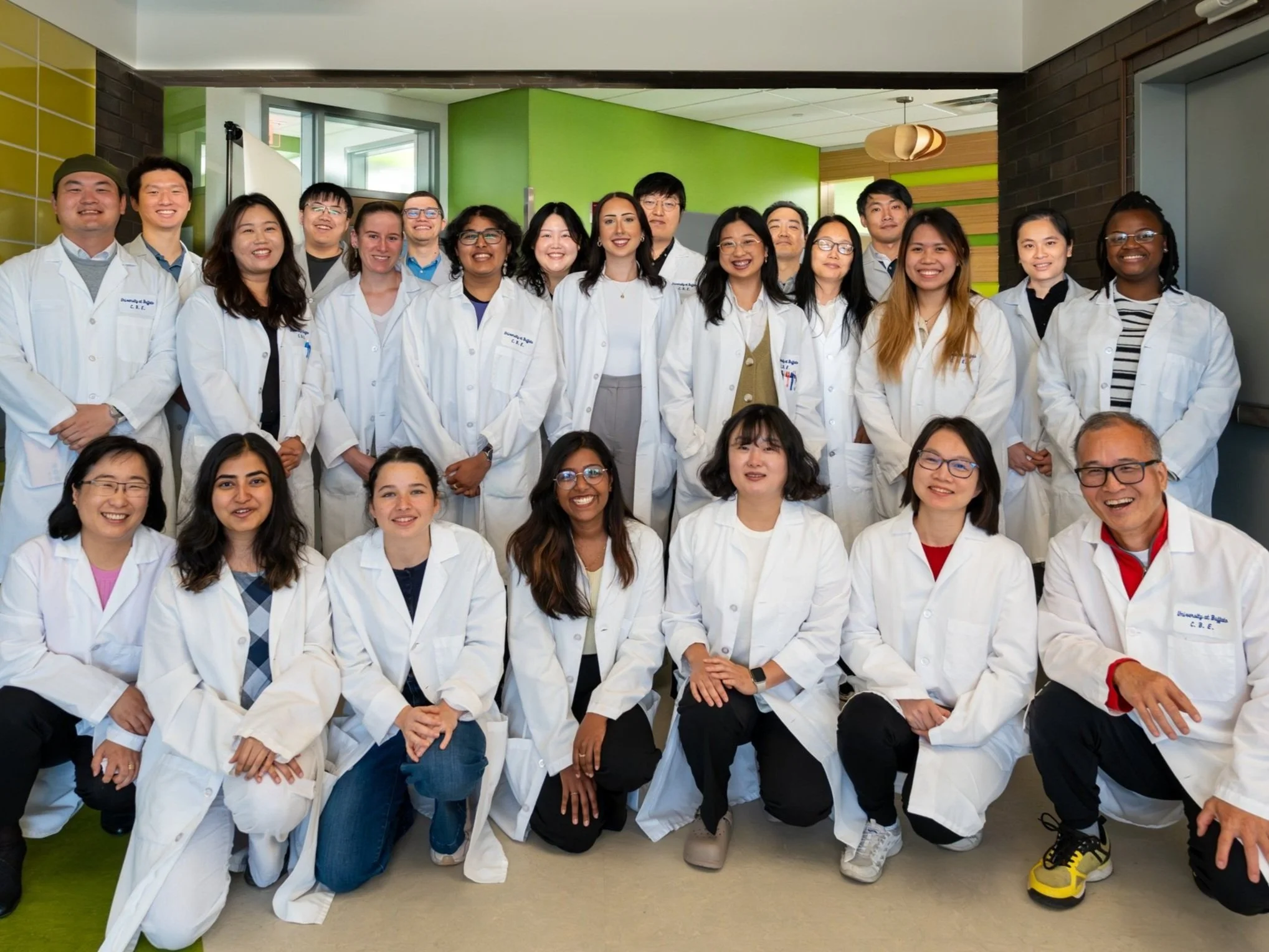
Our Team
Drs. Soo-Kyung Lee, PhD. and Jae W. Lee, PhD. are the principal investigators of FOXG1 Research Center. Our team is full of dedicated individuals with the common goal of studying FOXG1 Syndrome to find treatment options and further understand the condition.

Our Publications
To learn more details about our research, please refer to our publications.